Think about a big company’s software team. Business teams want new features fast. Customers want fixes now. Senior engineers are busy. Junior developers are learning. And there is old code that nobody fully understands.
This has been the story for years. In 2026, a new helper is here: AI agents.
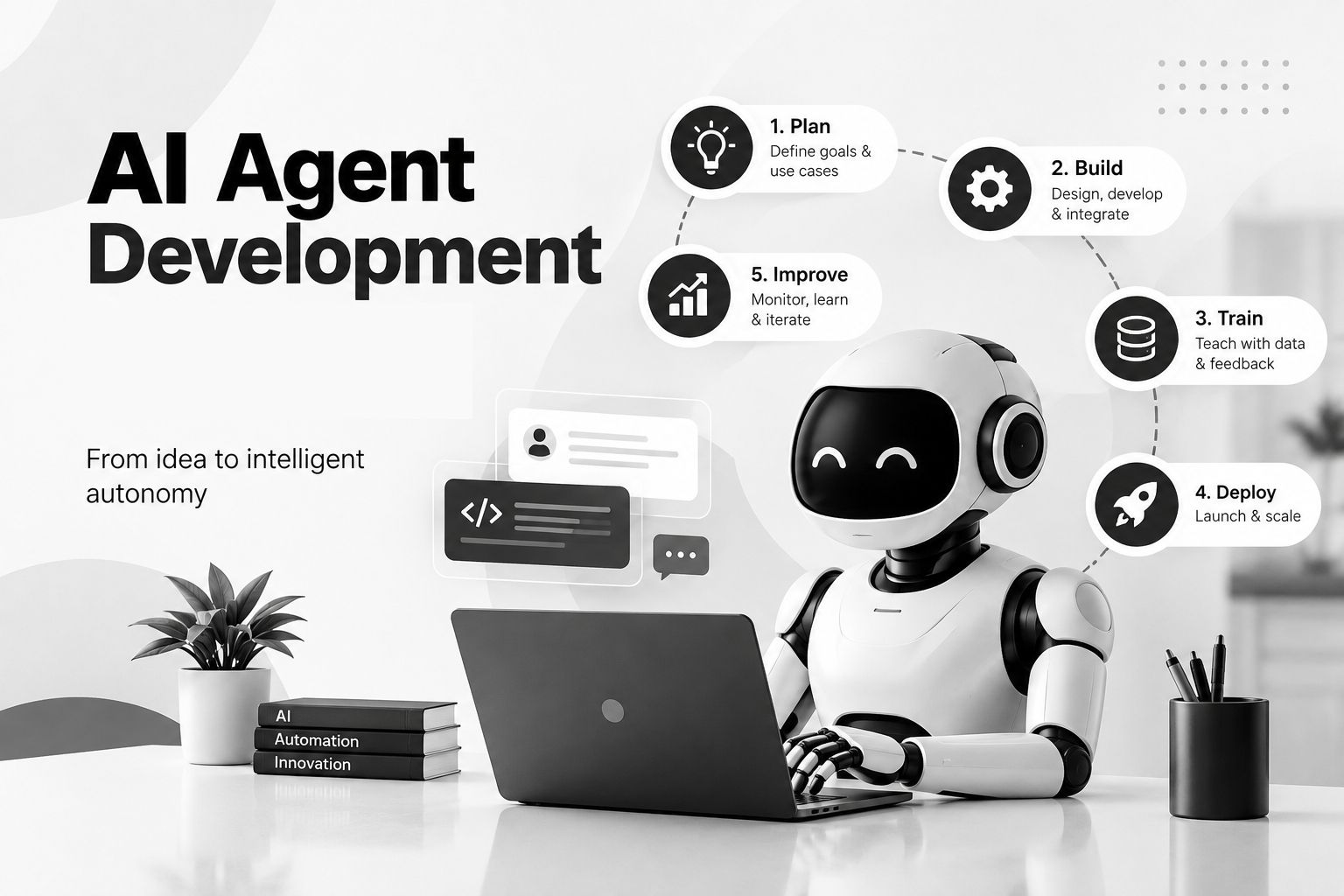
The term "smart typing tool" doesn't do justice to what these devices represent; rather than thinking of them as typing aids, consider them to be junior colleagues. Your AI agents are also virtually trained by a set of instructions to follow, so all it takes is for them to map out an entire project plan for you, code your app, automate test execution, address simple coding bugs (like fixing syntax errors), document work done on your behalf, and maybe even create a pull request.
Humans still make the important calls. The agents just handle more of the routine work. So people can focus on work that needs human judgment.
In this detailed blog, business owners will get to know how AI agents are transforming software development.
1.Why AI Agents Matter Right Now
Most software work moves in a straight line.
Requirements → design → coding → testing → release.
Every step adds waiting time. It adds confusion. It adds rework.
AI agents change this.
- Work on multiple parts at once.
- Read existing code.
- Check documentation.
- Draft implementations.
- Generate tests.
- Flag issues early.
The people involved in making decisions about what to create and approving what will be available for public use continue to do so. However, the agent's role is to facilitate a more efficient and timely experience.
The business case is simple:
- Features reach customers sooner
- Senior talent spends more time on tough problems
- Work becomes more consistent
- Work becomes less dependent on who is free that day
Teams that have redesigned how they work using AI agents report improved cycle times. On the other hand, those teams who simply use AI to automate existing processes often experience the same delays as before.
2.What AI Agents Actually Do
An AI agent takes a goal. It breaks the goal into steps. These agents use approved tools and the codebase. They can also checks its own work and keep going until the job meets the checks.
That is very different from basic autocomplete. Autocomplete suggests the next few lines in one file. Agents work across many steps and many files.
2.1.Planning and requirements
One big waste in software is building the wrong thing quickly. Agents can help. They can:
- Turn vague requests into clearer specs.
- Point out dependencies.
- Highlight missing information.
- Sketch ways to build the work.
For example, the business says, “We need a better way to update customer addresses.” An agent can look at existing services. It can find related APIs. It can check rules. It can draft a simple plan. Humans still approve the plan. But the start is clearer.
2.2.Code generation and implementation
This is what most people think of first. Agents have the ability to read as well as edit across multiple files by writing code. These agents detect patterns in the codebase and create pull requests for a human to review.
Developers spend more time reviewing. They spend less time typing every line.
2.3.Testing, debugging, and quality
Testing is one of the areas where multiple teams get to see high gains. Agents can generate test cases. They can do these tasks very smoothly:
- Run test suites
- Dig into failures
- Suggest fixes
- Create regression tests
- Find missing edge cases
- Help maintain tests.
This scales test coverage nicely. But it creates one bigger bottleneck for businesses that are reviewing all the tasks they are doing.
2.4.Deployment, operations, and maintenance
This area is moving slowly. But it is growing. Agents can help with integration and delivery pipelines. They can watch for odd patterns. They can support incident response. Human supervision stays standard for anything that touches production.
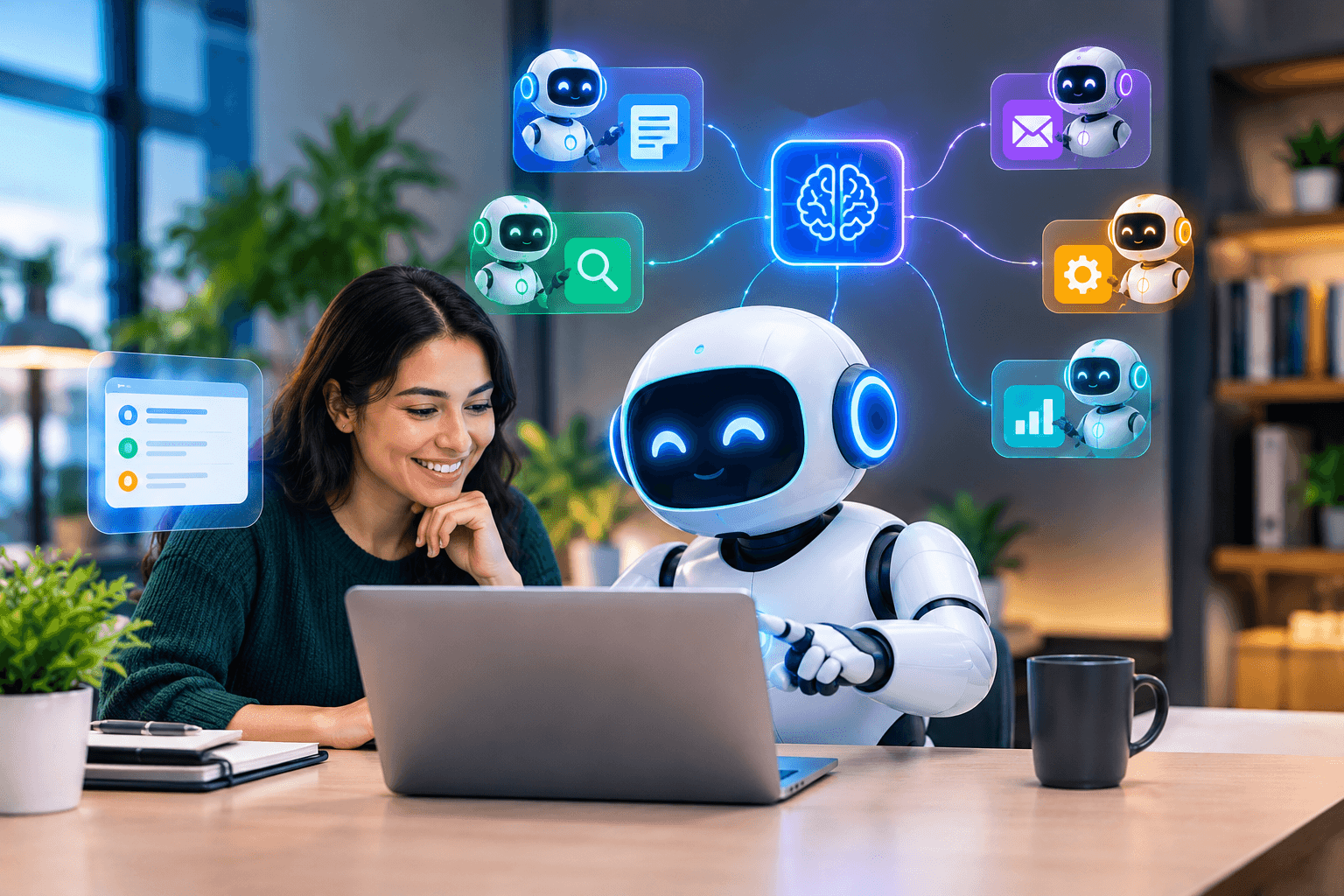
Multi-agent systems take this further. One agent might focus on coding. Another on security, docs, and testing. An orchestration layer keeps things organized and neat. So the workflow stays on track.
3.How Enterprises Actually Capture Value
There are various listed clear patterns that keep coming up from 2026 data and real-world rollouts.
3.1.Speed without uncontrolled risk
Teams that pair agents with solid checks report drops in cycle time. Some cut issue cycle time nearly in half. Others pull validation loops from weeks to days.
3.2.Better use of talent and smaller teams
Engineering groups are getting flatter. Big structures give way to smaller pods of three to five people. Those pods get support from several agents. Comfort with AI tools service now ranks as a top skill.
It often sits ahead of pure coding speed. Developers act more like directors. Product managers and designers jump in more directly.
3.3.Cost and capacity effects
Several hours saved per developer each week come up a lot in reports. In some cases, agents handle a big share of code reviews. They also help translate older systems. And that release of capacity allows you to do higher-value work.
There is no simple headcount reduction.
3.4.Quality and risk management
Concerns about defects from AI-generated code are still fair. Some teams have shipped work that later needed fixes. Debugging loads climbed in some spots. The practical approach uses risk tiers.
- Higher freedom for low-risk changes
- Tighter human checks for security or customer-facing work
- Strong automated tests help
- Clear records help
- Regular evaluation helps.
4.What Organizations Need to Get Right
These are the few things that organizations should keep in their mind.
4.1.Clear human-AI working patterns
The best setups treat agents like junior colleagues. They need:
- Good instructions
- Checkpoints
- Final approval.
Developers conduct several workstreams.
4.2.Security, compliance, and control
Unofficial tool use creates risk. Enterprises lock in approved tools. They set permission boundaries. They build visibility into what agents do.
5.Practical Examples of Impact
A mid-sized team runs a customer platform. Before agents, features moved through handoffs. Product, engineering, and quality took turns. Review queues created delays.
In larger enterprises, agents help modernize older systems. They scan large volumes of code. They propose translations. They generate supporting tests. Human experts still validate the critical paths. Progress on technical debt moves faster. Headcount does not need to climb in matching amounts.
Another pattern shows up in operations. Agents help with first-pass diagnosis of incidents. They handle routine fixes under defined playbooks. Recovery times improve. The early investigation steps happen faster and more consistently.
6.Challenges That Still Need Attention
Several friction points are still around in 2026.
- Review capacity has not kept up with generated code. This creates bottlenecks.
- Connecting agents to tools and legacy systems is very difficult, and businesses need to pay a very huge amount for that.
- Governance compliance totally varies across organizations.
- Cost control matters as model usage grows.
- Fully autonomous development is still rare.
- Most production use stays under human supervision.
Fixing these needs process, platform, and people. Organizations that treat adoption as pure tech fall short. Those that treat it as a change in work do better.
7.Competitive Implications for Businesses
Organizations that pull ahead combine agents with faster decisions.
- Build judgment and orchestration skills
- Keep improving systems
Advantage comes less from the latest model. It comes more from how reliably teams turn intent into working software.
For leaders, the questions are simple.
- Where are the biggest delays?
- Which workflows can allow more autonomy?
- Which needs tighter controls?
- How will success get measured beyond raw output volume?
Answering those with real data and then adjusting creates compounding returns.
8.Concluding Words
AI agents in software development are no longer some future idea. In 2026, they form a growing part of how effective engineering organizations deliver value. The enterprises that capture the opportunity will treat them as a core piece of how software gets produced. They will not treat them as an optional productivity layer.
The result is not simply faster coding. It is a more scalable, more responsive, and ultimately more competitive way to build and maintain the systems that run the business.
9.Common Questions Along With Their Answers
By reading all these questions, businesses can understand how AI agents are changing the software development era.
Q1. What are AI agents in software development, and how do they differ from earlier coding tools?
Ans. AI agents accept a goal. They execute various tasks as listed below:
- Plan steps
- Work with code and tools
- Check progress
- Adjust
Earlier tools offered suggestions in one session.
Q2. How do enterprises measure ROI from AI agents for software development?
Ans. Useful measures include shorter cycle times. More features shipped per team. Capacity freed for higher-value work. Defect rates. Total cost of delivery, including review and governance.
Q3. Why do some organizations see limited gains despite high tool adoption?
Ans. Gains stall when code is faster but verification is manual. Requirements stay weak. Data stays messy. Decisions stay sequential. The bottleneck moves. Full value needs redesign of work.
Q4. How should enterprises approach governance and risk with agentic AI?
Ans. Set clear autonomy levels by risk and by type of workflow. Keep people accountable for production changes that affect customers, security, or compliance. Invest in visibility into agent actions. Use approved tool lists. Evaluate what the agents produce regularly.
Q5. What skills become more important for engineering teams in an agentic environment?
Ans. Judgment rises in importance. Framing problems clearly rises in importance. System design rises in importance. Deciding how to verify work rises in importance. The ability to direct and evaluate agent output rises in importance. Pure speed at writing syntax declines relative to these capabilities.