How many software tools does your company use right now? Ask every department head. You will get different answers. Marketing uses one set of tools. Operations uses another. Finance keeps its own dashboards and approvals. Finance teams see rising invoices. IT handles endless integration requests. Employees waste hours switching between systems that do not connect well.
Most organizations run 100 to over 300 SaaS applications. The average company spends about $9,455 on SaaS for every employee. "Total yearly spend often hits $55.7 million". A big part of those licenses, often 36% or more, sits unused or barely used, wasting millions each year.
The problem goes beyond high software bills. Fragmented systems slow down decisions. They create messy data, raise security and compliance risks, and stop companies from fully automating their work. Leaders now ask a simple question. When does adding more separate tools cost more than building custom web apps that match your actual work, own your data, and cut the monthly fees?
This article looks at that question through real business results. It covers the true cost of fragmented systems and compares custom software development with ongoing SaaS fees. It shows how custom web application development can cut SaaS costs, optimize software spend, and deliver clearer long-term returns.
1.The Real Cost of SaaS Tool Sprawl and Fragmented Systems
SaaS grew fast because it fixed quick problems. Teams got tools without long buying cycles. Vendors offered specialized features. Over time, those tools created a new problem.
Business units now buy most of the SaaS tools. IT controls a smaller share. Tools bought without IT approval make up a real part of the app list, even if it is a smaller share of total spend. The result is clear. Teams use overlapping project tools. They run multiple collaboration platforms and keep duplicate analytics tools. Many licenses sit unused.
Data shows organizations waste real money.
- Average yearly license waste hits nearly $19.8 million, according to Centero
- Usage rates stay low.
- Beyond the license fees sits the daily cost.
- Employees jump between many apps.
- Data needs manual fixes.
- Connections break when vendors change their systems or prices.
- Security teams face a bigger area to watch.
These costs grow. SaaS prices have risen fast. Some reports show double-digit yearly increases from AI features, usage-based pricing, and list price increases. Multi-year deals lock in higher costs. Growth adds users and raises per-seat fees. What started as flexible spending turns into a hard cost to control.
Software tool consolidation is now a top goal for many CIOs and CFOs. Cutting the number of vendors helps a bit. It rarely fixes the gap between generic tools and the unique processes that set a business apart. That gap is where custom web application development shows clear value for cutting costs and running better operations.
2.Why Fragmented Tools Limit Efficiency and Scalability
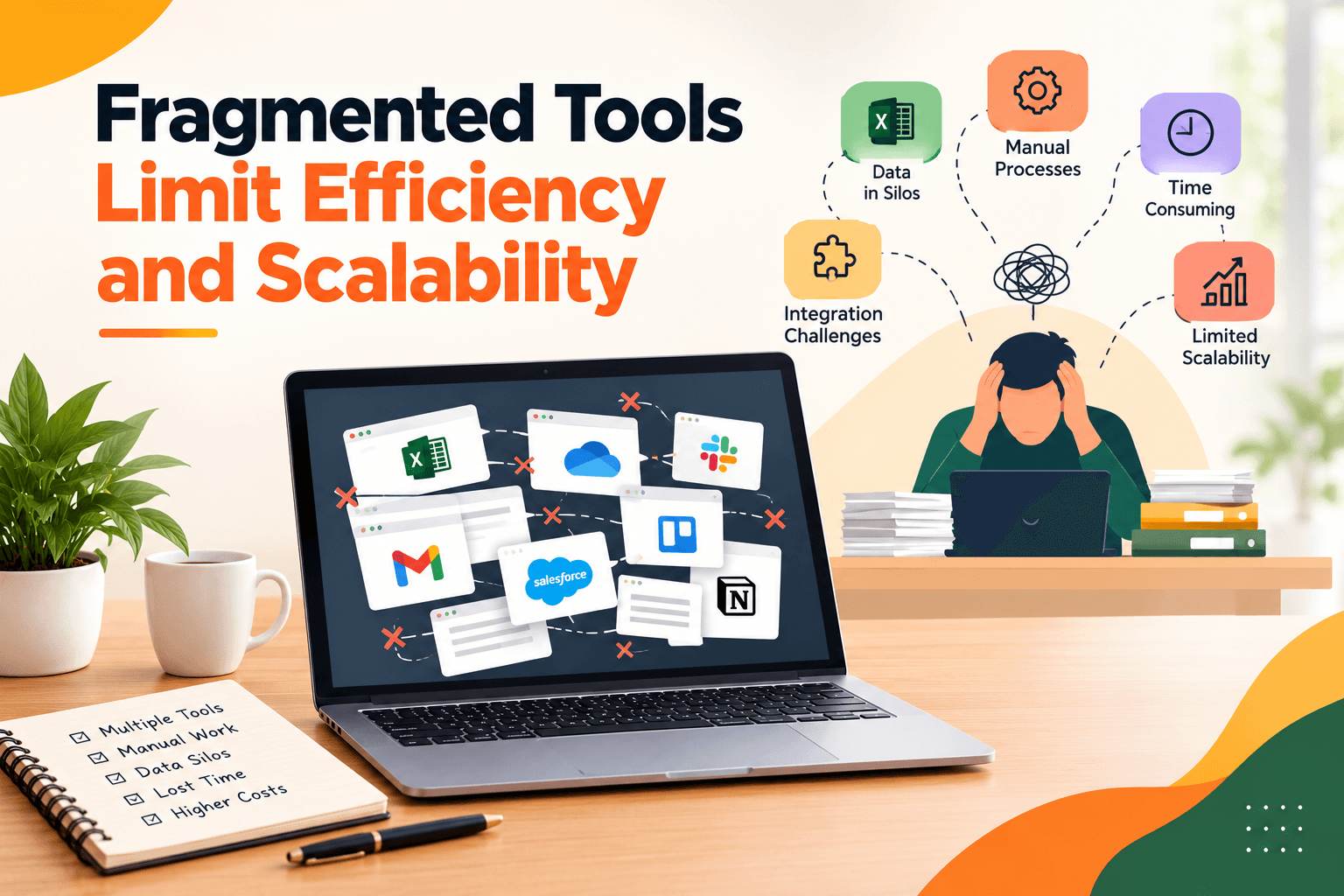
Fragmented systems create daily friction that simple cost numbers miss. Think about a common workflow. It might cover customer onboarding, order fulfillment, or compliance reporting. Data starts in one system. It moves to another for approval and shows up in a third for reports. Finance or operations teams still fix things by hand.
Each step adds delay and error risk. Business process automation stays partial. The tools were never built to work as one system. Reports need multiple exports or weak connections. When leaders want a full performance view, teams spend days putting data together instead of acting fast.
Scalability suffers too. Adding people or entering new markets means buying more seats across many platforms. Missing features force workarounds or costly vendor help. Vendor lock-in becomes real. Switching costs rise with every existing connection and data move.
A competitive edge fades when rivals use the same SaaS tools. Advantage now comes from how well a company runs its unique processes. Custom software development fixes this. It shapes technology around those processes instead of forcing processes to fit the tools.
3.Cost Optimization Strategies for Custom Web Application Development
Custom web apps are built for an organization’s real workflows, data needs, and connections. Unlike SaaS, the company owns them. No per-user fee grows with headcount. There is no forced upgrade from a vendor roadmap. Features change based on business needs, not a shared customer base.
Costs shift from pure monthly fees to an upfront build plus ongoing care. Build costs vary by size. Realistic ranges for mid-market or enterprise apps often start in the low-to-mid six figures for core work. Yearly maintenance usually runs 15 to 20% of the initial build cost plus hosting. Over three to five years, this often costs less than matching SaaS stacks once you add seats, integrations, custom work, and price hikes.
The savings grow as user numbers rise. SaaS fees scale with seats or usage. Custom apps mainly scale with hosting and support. Both can be controlled. Companies that replace several overlapping tools with one integrated custom platform often drop redundant licenses and gain tighter process control.
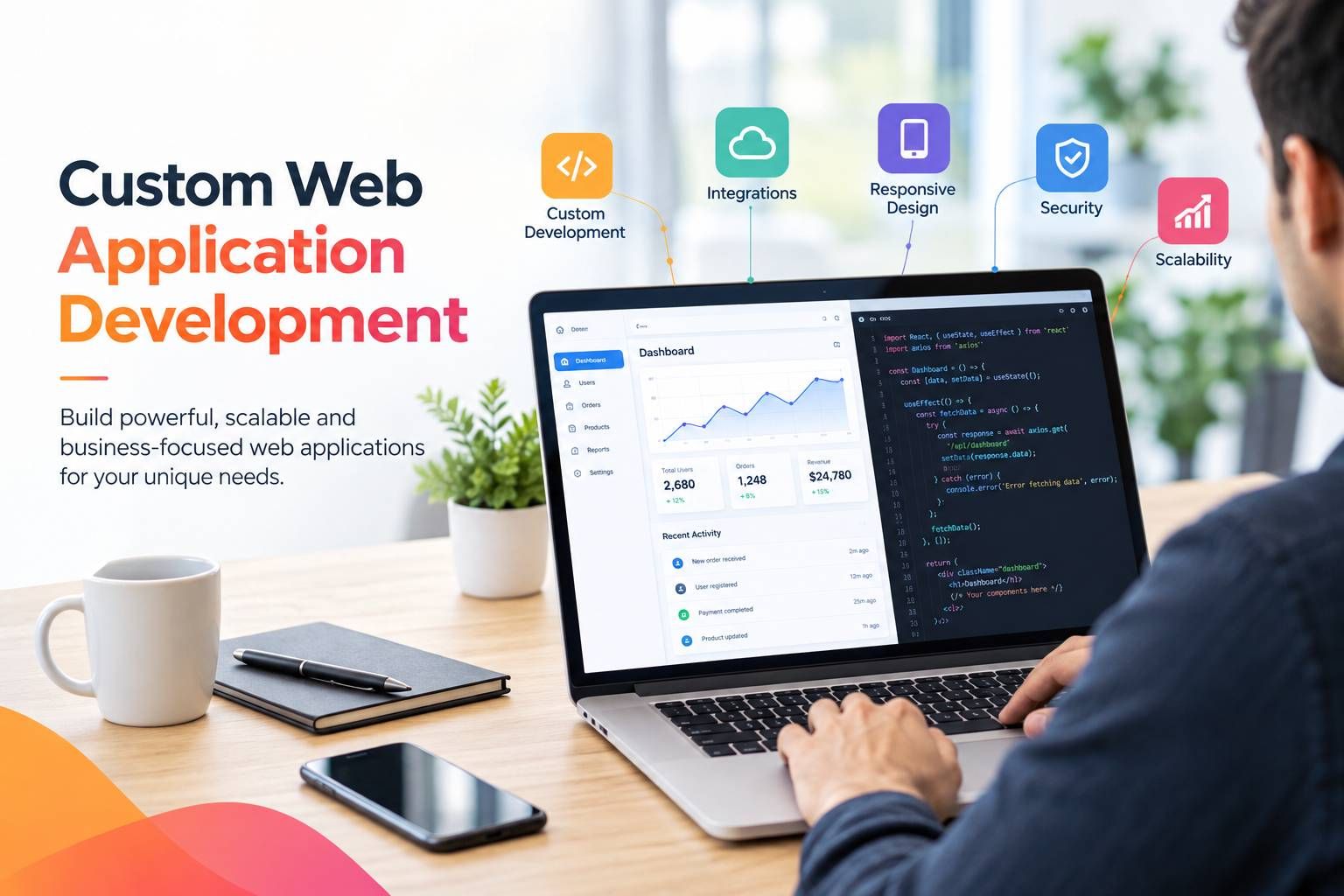
Custom apps also support better software integration and business process automation. Data stays in controlled systems. APIs and internal services can be built for reliability. Security and compliance rules can be part of the design from day one.
These traits make custom software development a strong fit for companies with unique or complex processes. Marketplace operators, firms with complex supply chains, regulated industries, and digital transformation leaders often find that bending people and processes to fit software costs more than shaping software to fit people and processes.
4.How Custom Software Delivers Measurable ROI and SaaS Cost Reduction
Judging custom software compared to SaaS (Software as a Service) means looking past sticker prices. Focus on total cost of ownership and business results. SaaS looks cheaper at first because development costs are shared. The full picture includes seat growth, feature upgrades, integration work, training, support fees, and regular price rises.
Custom development needs higher upfront money. Once live, ongoing costs cover hosting, maintenance, and planned updates. There is no linear fee for adding users. Owning the code and data gives flexibility that lowers future switch costs and vendor risk.
Real comparisons show the change. For systems with dozens to hundreds of users and special workflows, break-even often comes in 12 to 28 months. This depends on seat count and the SaaS features being replaced. Over five years, the total difference often favors custom once you include license waste, lost time from switching tools, and process gaps.
Extra value shows in areas hard to put on a spreadsheet but clear to leaders:
- Faster decisions because data and workflows live in one system.
- Higher staff output from less tool switching and fewer manual fixes.
- Stronger competitive position through processes rivals cannot simply buy.
- Better control over data location, security, and compliance rules.
- The power to automate full processes that used to be split.
Software cost optimization is more than cutting invoices. It means reclaiming time spent managing tool sprawl and using that time for growth. Companies that treat custom web application development as a strategic move, not just a tech project, capture more of this wider return.
5.Practical Scenarios Where Custom Apps Outperform Fragmented Tools
Picture a multi-sided marketplace that grew by adding SaaS tools for vendor management, order routing, payments, and support. Each tool fixed a short-term need. Over time the mix created data silos, slow settlements, and higher per-transaction costs. A custom platform unified the core flow, connected needed external services, and owned the data model. Ongoing software spend dropped. Settlement times improved. Visibility rose for internal teams and partners.
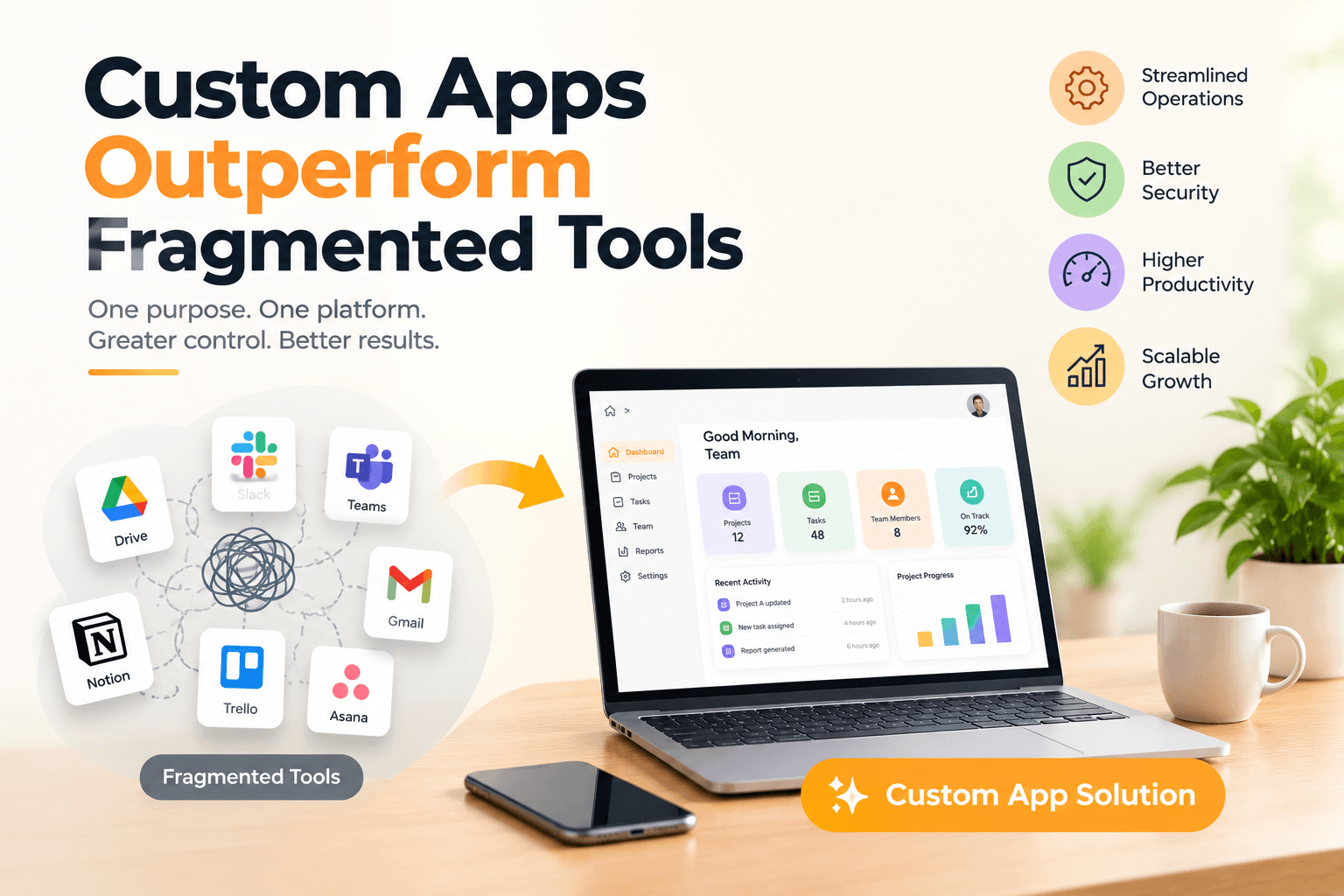
In another case, a growing services or operations firm used separate tools for project tracking, resource planning, time capture, and client reports. Manual fixes ate many staff hours each month. A custom web app built around the firm’s real delivery method combined these functions. Recurring software costs fell. Client reports came faster. Clear utilization data helped pricing and capacity choices.
Digital transformation leaders in regulated or data-sensitive fields face the same pattern. Standard SaaS tools may lack needed audit trails, data location controls, or workflow fit. Building targeted custom apps for the toughest processes, while keeping strong SaaS for basic needs, often creates a hybrid model with better cost control and lower risk.
These cases share a pattern. The choice is not about “build versus buy” as a belief. It is a practical look at where generic tools create enough cost, friction, or limits that owning the software layer becomes the better path.
6.Conclusion
Uncontrolled SaaS growth is giving way to smarter software spending. Growing costs per employee, ongoing license waste, and the daily friction of fragmented systems push leaders to review total ownership costs.
The companies that gain the most consider this a business choice. They measure results in lower software run rates, recovered productivity, faster decisions, and stronger differentiation. In a market where software costs pressure margins and tool sprawl complicates daily work, the ability to own and shape the apps that run key processes becomes a real competitive edge.
Custom software is not right for every need. Basic functions often stay best with proven SaaS platforms. Where the numbers and strategic value line up, moving beyond pure subscription models can deliver clearer SaaS cost reduction and stronger software cost optimization than relying on an ever-growing set of fragmented tools.
7.Commonly Asked Questions Along With Their Answers
These are the most commonly asked questions about why companies use outperforming fragmented tools for reducing costs.
Q1. What is the main difference between custom web application development and continuing with multiple SaaS tools?
Ans. Custom development builds software that the company owns and also designs it around its actual workflows. SaaS tools are multi-tenant services with a recurring per-user or usage fee and proprietary roadmaps determined by the vendor. The gap can basically be broken down into three areas, which are multi-year total cost of ownership, process fit, and control over data and updates.
Q2. Why do many organizations still experience high SaaS costs even after consolidation efforts?
Ans. Consolidation efforts actually reduce vendor counts but preserve per-seat pricing, unused licenses, and other inefficiencies. Unless you fix utilization, the cost associated with seat increases based on growth and the friction caused by tools that only sometimes serve core work, spend keeps going up.
Q3. What risks should decision-makers consider before choosing custom web apps?
Ans. The main risks are the higher initial cost, the need for continuing ownership capacity, and potential scope growth during development. These can be mitigated using proper initial scoping, clear metrics for success aligned with business results, and realistic maintenance plans.
Q4. What role does business process automation play in the decision?
Ans. With data (and workflows) spread across systems, automation is limited by the use of fragmented tools. With custom web apps, these tasks can be designed so that automation will cover the whole process. This is often larger than the software cost savings but directly translates into productivity gains and fewer errors.