Every business loses money in the same spot. Something needs a decision. A person takes too long to make it. A lead sits for an hour. A claim waits three days. A shipment needs a reroute, but no one notices right away. A customer question goes unanswered for too long. None of this shows up as one clear line on a profit and loss statement. But it adds up. Revenue falls. Costs rise. Margins quietly decrease.
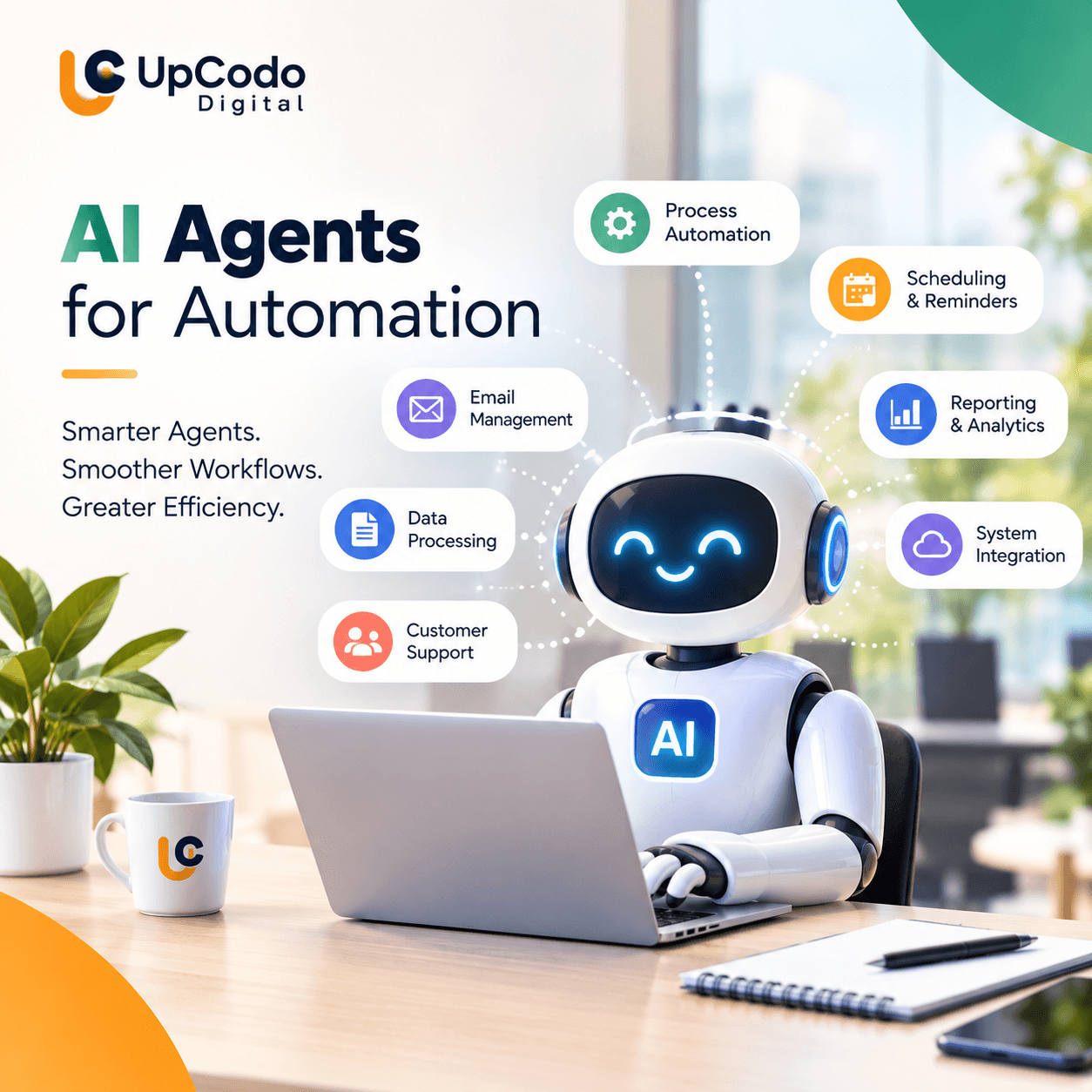
This is not a staffing issue. Adding more people rarely fixes it. It is a decision-speed problem. In 2026, the companies closing that gap use AI agents. These are software tools that do more than suggest ideas. They plan, decide, and act.
The shift is already clear in the numbers. According to the results of McKinsey's 2025 State of AI survey, 88% of organizations are deploying AI in at least one business function. In fact, by the end of 2026, Gartner expects that at least 40 percent of enterprise applications will include task-specific AI agents. In late 2022, it was less than 5%. That is up from under 5% a year earlier. Yet only 23% of organizations have scaled an agentic system past a pilot.
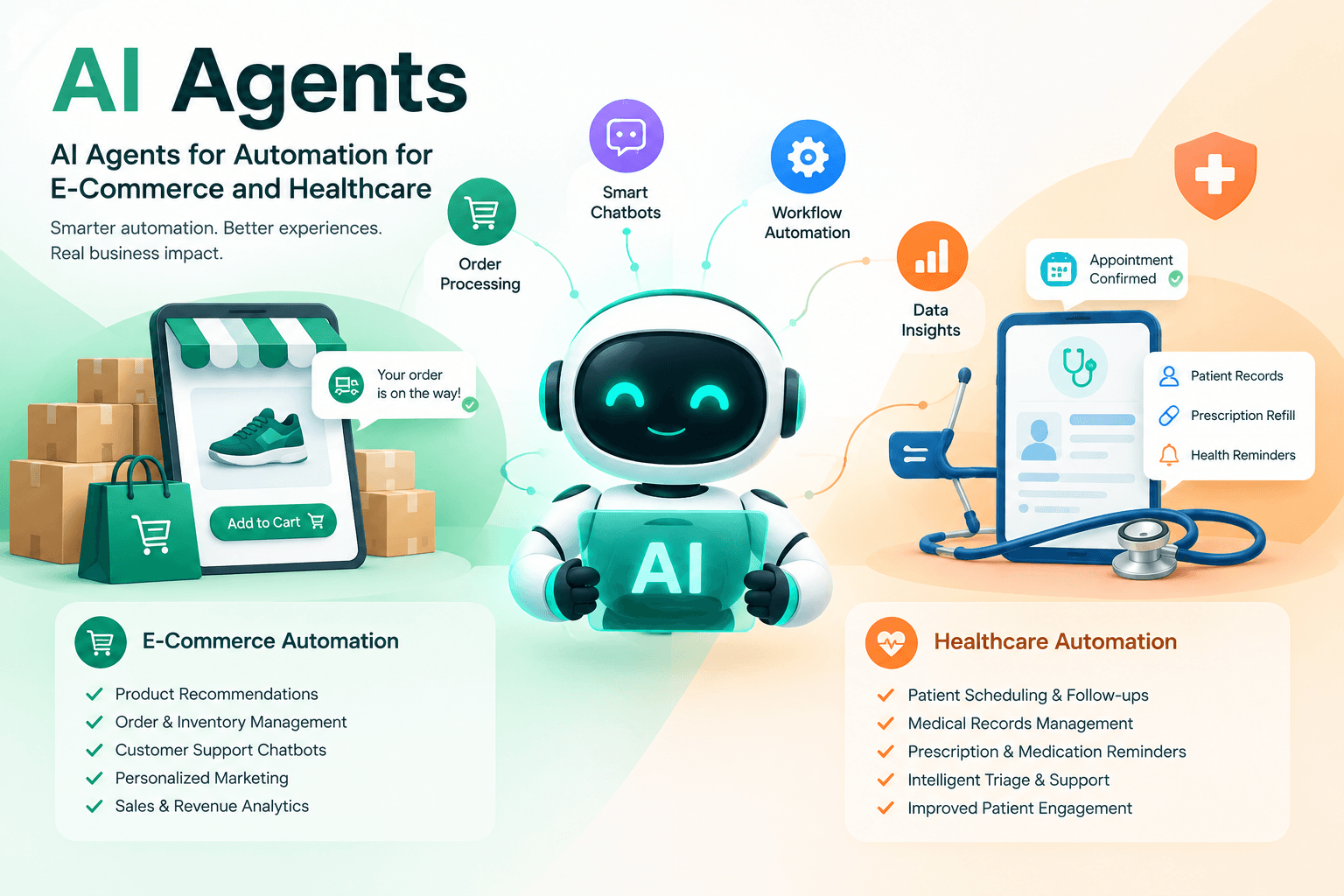
This detailed guide explores how AI agents work in e-commerce and healthcare industries.
1.What Are AI Agents, and Why Do They Matter More Than Regular Automation?
Traditional automation follows fixed rules. It works when a task never changes. If X happens, do Y. AI agents work differently. They read messy information, reason through steps, decide, act across systems, and need little human help.
Here is a simple way to see the difference. A regular chatbot can answer, “What are your store hours?” An AI agent can read a customer’s order history, check stock in three warehouses, apply a discount, rebook delivery, and send a personal confirmation. It does all that in one go. A person steps in only when the agent is unsure.
This matters for decision-makers. It changes where the return shows up. Regular automation cuts the cost of repeated tasks. AI agents cut the cost of decisions. Decisions are what slow a business down.
2.How Can AI Agents Help Turn More E-Commerce Interactions Into Sales?
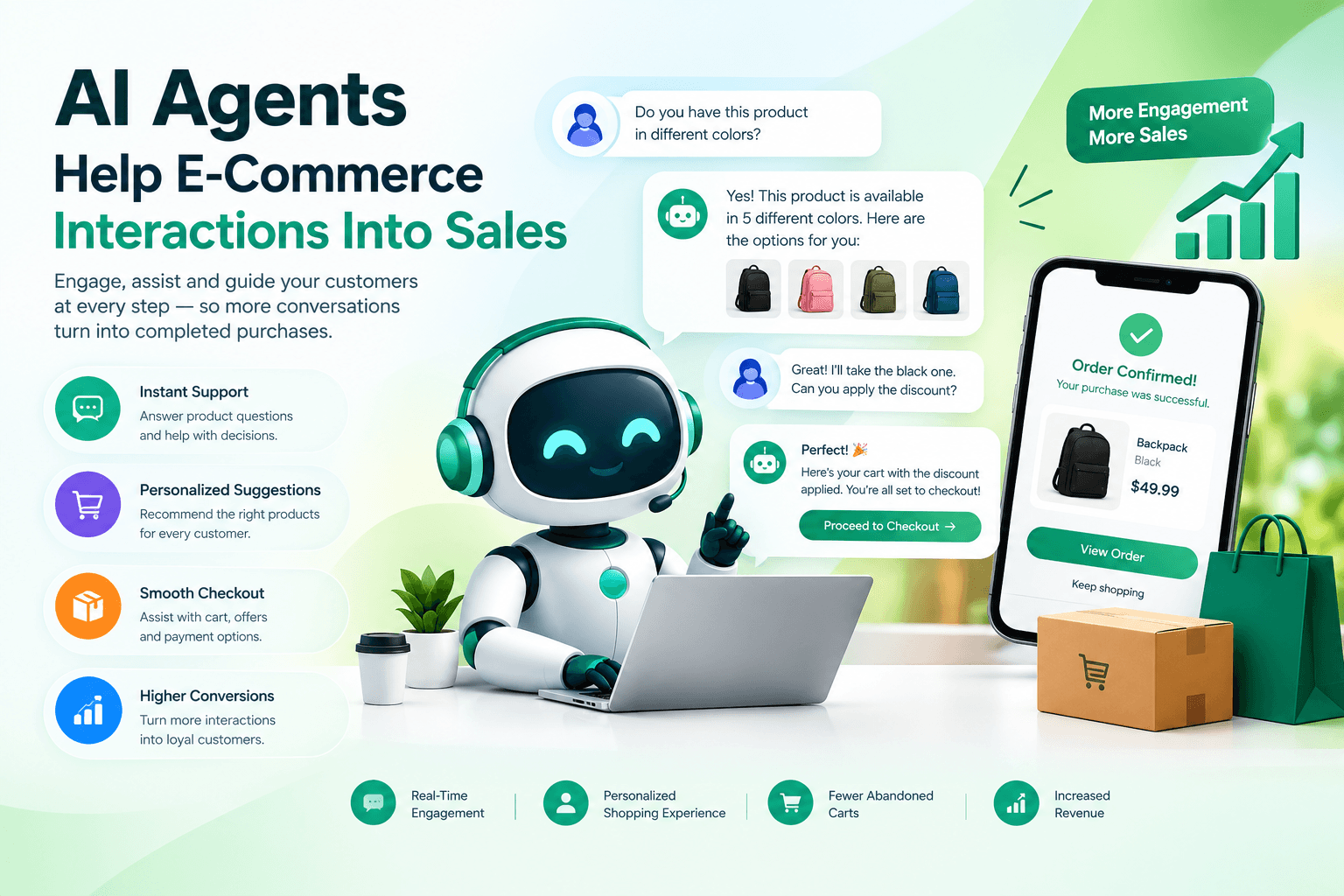
E-commerce is one of the most mature places for AI agents. The return often shows up straight in revenue, not just lower costs.
2.1.Personalization That Actually Moves Revenue
Adobe Analytics found that AI-driven referrals convert 31% higher than other traffic.
The idea is easy to explain. An AI agent does not just suggest products based on one click. It builds a live profile from browsing, past buys, price sensitivity, and even the words a customer used in chat. It updates that profile with every new action. A shopper who bought a skincare item last month gets matched to a refill or a related product. No one has to build that campaign by hand.
2.2.The Rise of Agentic Shopping
A newer shift is agent-mediated commerce. The customer’s own AI assistant does the shopping. Early data shows AI-assisted product discovery drives conversion rates up to 4.4 times higher than regular search. The agent already knows the shopper’s preferences before any product appears. Traffic from AI referral sources to retail sites has grown a lot over the past year. Industry surveys show about 39% of consumers have already used an AI tool to shop.
This has a clear business meaning. If more shopping decisions happen inside a third-party AI assistant, your product data, pricing accuracy, and structured content become the new storefront. Merchants who have not prepared their catalog data for AI agents to read and use already see lower conversion from this channel than those who have.
2.3.Customer Support Without the Wait
AI agents in support resolve tickets about 18 percent faster. They reach a 71% first-contact success rate in current setups. This frees human agents for the complex, high-value talks that need a person. For a retailer in a big sale season, this is the difference between a support queue crashing under Black Friday volume and one that scales without extra seasonal staff.
Business takeaway: In e-commerce, AI agents are not just a nice support feature. They are a direct revenue tool. Businesses that wait for that revenue to competitors who already personalize at scale.
3.How Can AI Agents in Healthcare Automate Back-Office Operations?
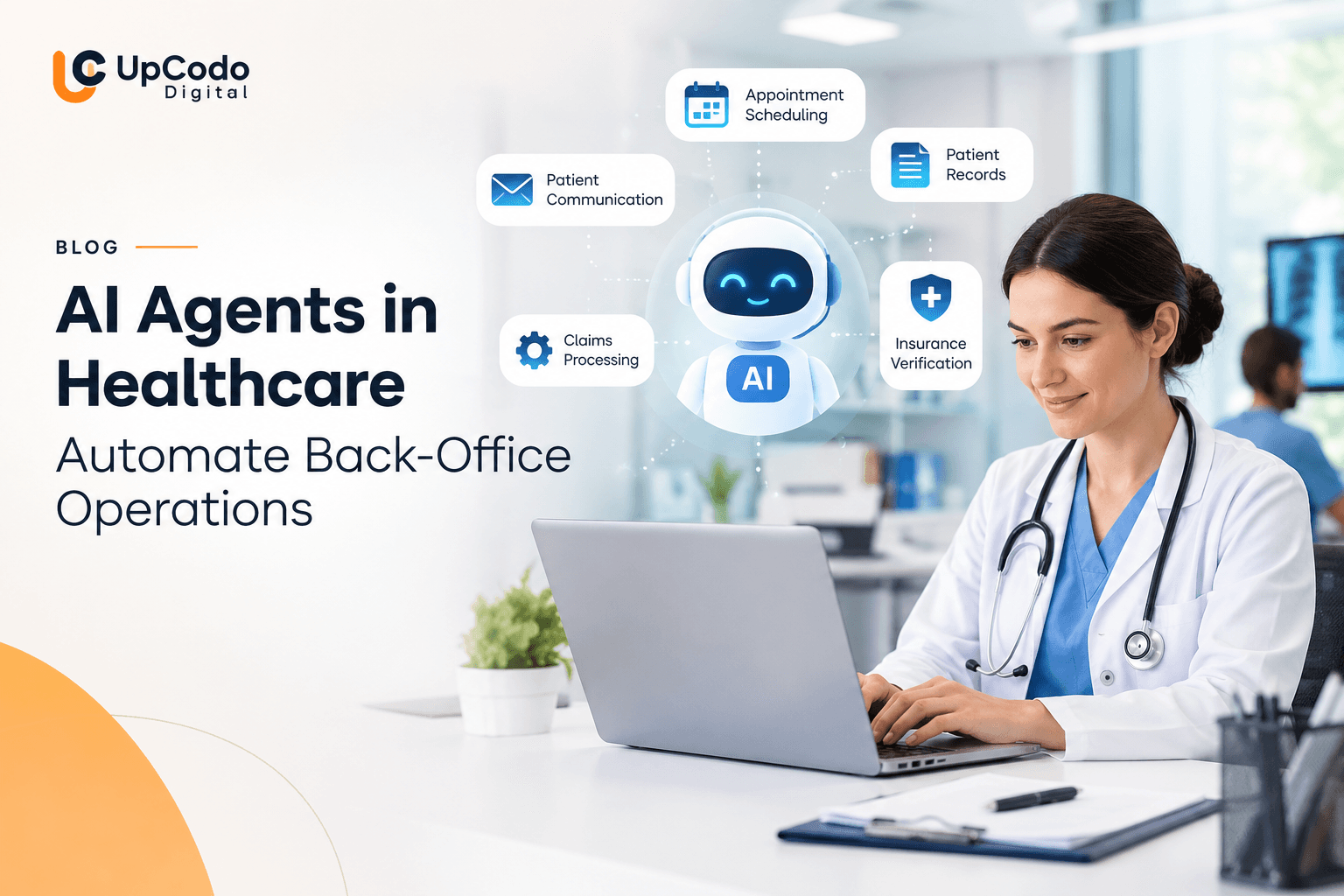
Healthcare leaders often expect the AI agent talk to start with diagnosis or treatment. In practice, the fastest, safest, and clearest wins in 2026 sit in the administrative layer. That is also where compliance risk is lowest, and return is easiest to see.
3.1.The Documentation Problem
Physicians often spend nearly two hours on electronic health record paperwork for every hour with a patient. That work spills into personal time and drives burnout. Organizations using AI agents for clinical documentation report a 42% drop in documentation time. That saves providers about 66 minutes per day. It is close to one extra patient visit reclaimed per provider each day.
3.2.Prior Authorization and Claims
Prior authorization is one of healthcare’s worst bottlenecks. Most requests take between two and three business days. The majority of that time is spent on manual forms, talking to payers by phone, and chasing missing documents while the patient waits. AI agents that read clinical notes, match them to payer rules, and submit clean requests are slashing those times. Finance teams also see fewer denials because first submissions are more accurate and complete.
3.3.The Macro Opportunity
According to McKinsey and the National Bureau of Economic Research, increased use of AI in many facets of healthcare could reduce total U.S. healthcare costs by 5 to 10%. That translates to approximately $ 200- 360 billion per year. In early 2026, a study published in a major medical journal said that three out of five healthcare executives expect agentic AI to help enhance the provider-patient experience. Over 80% expect it to deliver significant value in both clinical and back-office work.
3.4.Where Human Oversight Still Leads
It is worth being clear with buyers. AI agents in healthcare are not replacing clinical judgment. They should not be sold that way. The strongest setups pair autonomous admin work with required human review on anything tied to diagnosis, treatment, or patient-facing clinical advice.
This is also why healthcare, along with government, still lags other sectors in production-level agent use. It sits around 18% compared to nearly 47% in banking and insurance. The technology is ready for the back office. Leaders are rightly more careful about the exam room. That caution is good governance, not a weakness.
Business takeaway: For hospital and health system leaders dealing with margin pressure and clinician shortages, administrative AI agents are the fastest and lowest-risk path to real savings. The data already supports that.
4.What Separates Enterprises That Scale From Those Stuck in Pilots
Fewer than a quarter of organizations have successfully scaled agentic AI. It helps to name what the leaders do differently.
- They pick workflows with clear, measurable outcomes and avoid vague goals like "improve customer experience."
- Enterprises build in human review at set checkpoints. They do not aim for full autonomy on day one.
- They put agents directly into existing systems of record such as the CRM, the EHR, or the TMS. In fact, they do not run them as a disconnected side tool.
- Enterprises measure payback in months, not years. Median time to value on agent deployments is about five months. Simpler cases like lead response often pay back in under four.
- They treat data quality as a must-have, not a later step. Every industry example above needed clean, structured, reachable data. An agent can only act as well as the information it can reach.
5.The Road Ahead for Autonomous AI Agents
The direction is clear even if the speed differs by industry. Autonomous AI agents are moving from optional pilots to standard infrastructure. They are being built into the software companies already use rather than added as separate tools. The businesses that treat this shift as a strategic priority now, instead of a future idea, are the ones building the operational edge their competitors will spend years trying to match.
6.Conclusion
The pattern across e-commerce and healthcare is the same. AI agents work well wherever a business has a high-volume, time-sensitive decision that currently waits for a person to be free at the right moment. Remove that wait, and the business either brings in more revenue, cuts more costs, or protects more margin. Often this happens within months of going live.
The real risk in 2026 is not picking the wrong AI agent vendor. The companies that move with care, starting with one well-defined workflow and growing from a proven result, are the ones that will still set the pace when this technology becomes basic rather than a special advantage.
7.Commonly Asked Questions And Their Answers
Read all these extra questions to know how AI agents are automating in various industries.
Q1. What is the difference between AI automation and AI agents?
Ans. AI automation usually follows fixed, pre-set rules for repeated tasks. AI agents go further. They reason through multi-step problems, make decisions based on context, and act across multiple systems without a person directing every step. The work gets done either way, but agents handle far more complexity and uncertainty than traditional automation.
Q2. Why are AI agents gaining traction in e-commerce and healthcare specifically?
Ans. Both industries share a common trait. They have high volumes of repeated, time-sensitive decisions where delay costs money. That can be a lost sale, a denied claim, a lost lead, or a missed delivery window. The mix of volume, urgency, and clear return makes them the fastest-moving sectors for agentic AI adoption.
Q3. How quickly can an enterprise expect to see ROI from AI agent automation?
Ans. Current data shows a median payback period of about five months across functions. This varies by use case. Simpler deployments, such as lead response agents in real estate or customer support agents in e-commerce, often show clear value within three to four months. More complex clinical or supply chain workflows can take closer to nine months to fully pay back.
Q4. Are AI agents safe to use for high-stakes decisions like clinical care or property transactions?
Ans. The most successful and safest setups keep full autonomy for lower-risk, high-volume tasks such as documentation, scheduling, or lead qualification. They route higher-stakes decisions to a human reviewer. This hybrid model is why healthcare and real estate are seeing strong administrative gains from AI agents while keeping human judgment central to diagnosis, treatment, and negotiation.
Q5. Why do so many AI agent projects fail to scale beyond a pilot?
Ans. Analyst research points to unclear return targets, weak governance, and poor integration with existing systems as the main causes. The technology itself is rarely the limit. Companies that define a specific, measurable workflow before they start and that put the agent into their existing systems of record consistently see better results than those that treat AI agents as a general experiment.
Q6. What should a business prioritize first when adopting AI agents?
Ans. Start with one workflow where delay is already a clear, measurable cost. Examples include lead response time, claims processing, or shipment exception handling. Prove measurable return on that single use case. Keep a human checkpoint for higher-risk decisions. Use that result in building the internal case for wider use. This approach consistently works better than trying to automate an entire function at once.