
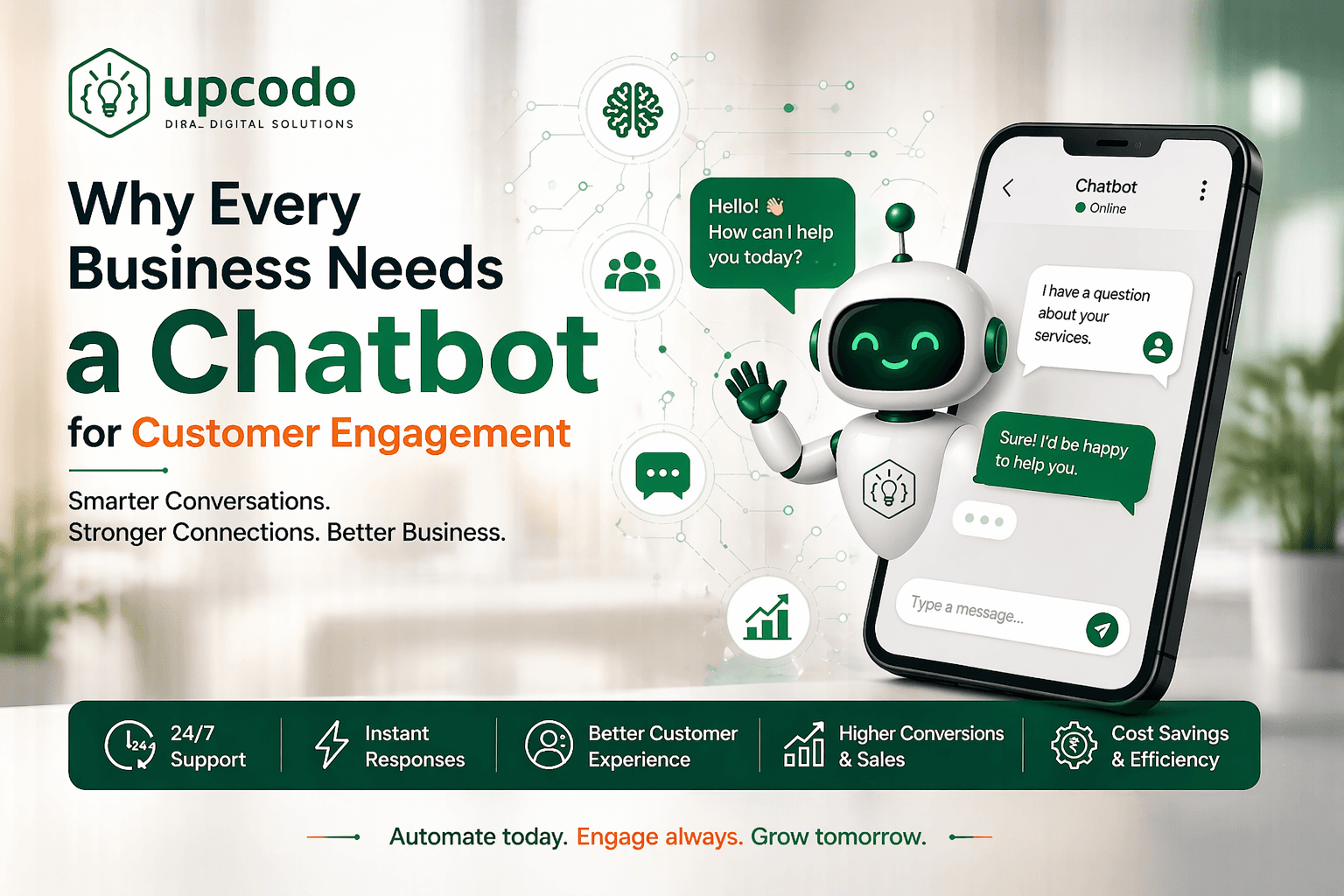
Nowadays, businesses are looking for innovative way to get enhanced their customer service, augment engagement, and streamline operations. This is when implementing a chatbot for customer engagement move toward into the picture, simulating human-like conversations with users in real time. Chatbots can make available various services, from customer support to e-commerce transactions, deployed on various platforms such as websites, social media, and messaging apps.
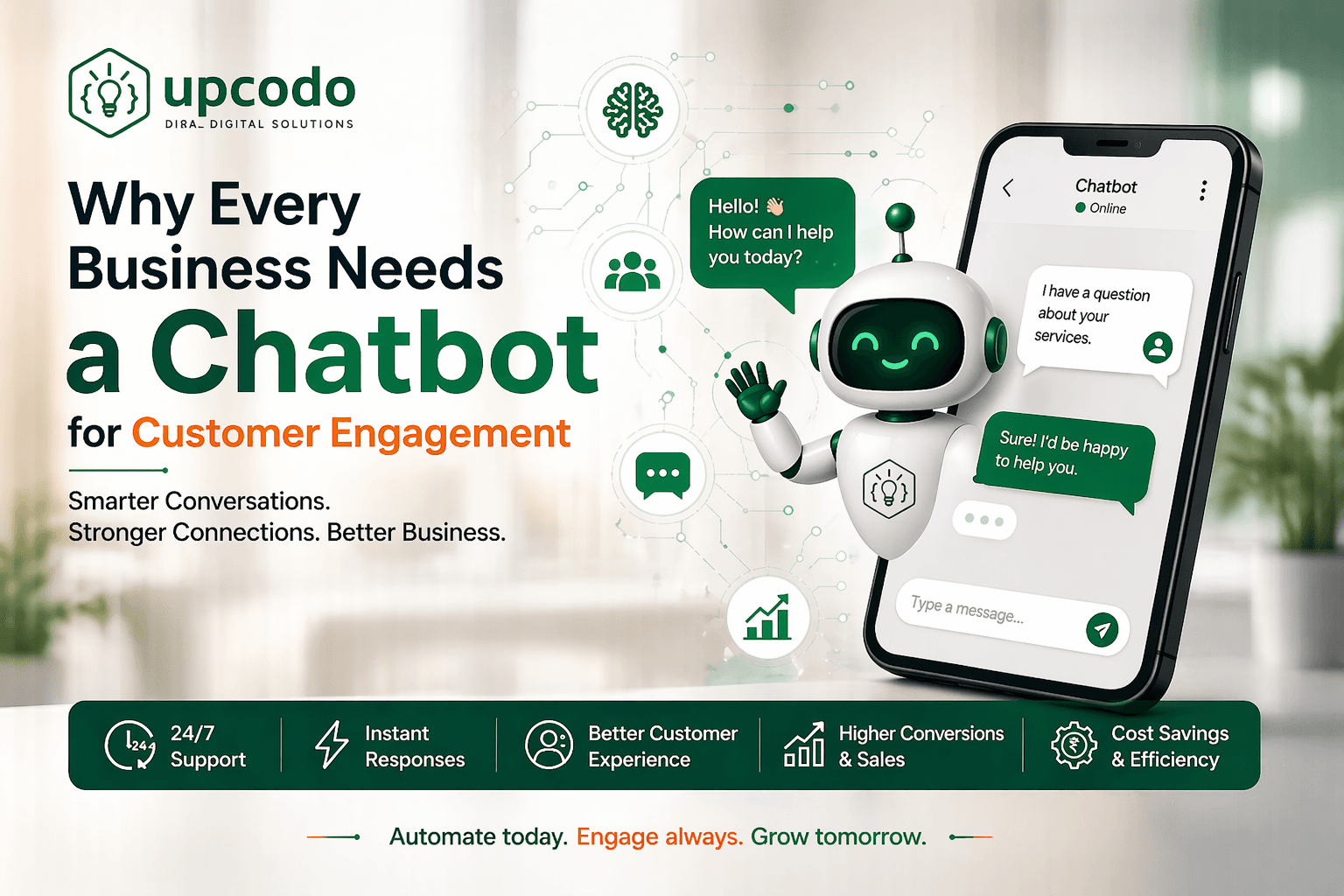
What are chatbots?
A majority of the people have used a chatbot or at least heard about it, at least on the conceptual level.
Actually it has become a necessary element in most companies that have customer service or a service help desk, particularly when they are operating in a mature or significant sector that has high customer demands and is highly competitive on the market.
Chatbots are computer applications (artificial intelligence or AI) programs capable of simulating human dialogue or communicating via messaging platforms. Such interfaces encompass web sites, applications on mobile devices, and messaging apps like Facebook Messenger, WhatsApp, WeChat and Viber.
The customer communication systems, such as a Customer Service Chatbot, are client-facing and are used to automate communication with customers and respond to customer queries. They also assist employees in terms of repetitive work and even resolving frequent and yet complicated questions. They are also able to save and accumulate customer data as a lead generation or targeting potential customers.
What Is Chatbot business?
Business chatbot is an AI-based application that is created to replicate a human dialogue with clients. Chatbots encompass are into websites, messaging apps, and platforms, where they act in retort to customer queries, offer customer support, and be of assistance with other tasks like product recommendation or timetable planning.
The chatbots are implemented in the retail sector, health sector and customer care to automate the routine activities, enhance performance and ensure that the customers are served instantly, not mentioning the low cost incurred in the operation.
Business vs. Customer Support Chatbot vs. Traditional Customer Support
While a Business Chatbot Benefits a company by providing 24/7 instant replies and handling vast amounts of interactions at once, traditional support relies on human agents. Although business chatbots automate the process of communication with customers by using AI-based dialogues, the usual manner of dealing with customer service is by employing human agents to address inquiries. The following is a comparison of the two methods:
Chatbot: 24/7 reply, instant replies, Chatbots can instantly, 24/7 respond to customer inquiries, automate repetitive processes, and switch a vast amount of interactions at a time. They can be used to deal by means of frequently asked questions, build reservations, and put forward product selections.
Traditional Customer Support: Traditional support is the way that human agents engage inquiries via phone, email, or live chat. Even although these interactions are customized and capable of managing complex matters, they are, in the best part instances, slower and rely on the ease of use of agents. Conventional support might be more resource intensive and might not be easily scaled when there are peak periods.
What are chatbots and how they work?
Chatbots are found on natural language processing (NLP) and conversational AI technology that supports chatbots to gain user input and make available responses that sound conversational. The unique advantage of chatbots is that they are on hand all the time 24/7. Chatbots are offered around the clock, unlike human agents who have need of sleep (and snacks) to be expert to help customers. This involve that your customers can receive the assistance they require at any time of the day; the application of a Website Chatbot for Business is that it is always available whether it is 2 PM or 2 AM unlike human agents who require sleep and breaks.
What are the benefits of chatbots in customer service?
Chatbots are quite clever proficient to carry out quite a few enquiries at the same time thus minimizing customer waiting time. These consequences outcomes are in faster resolution and customer satisfaction. Still, chatbots may also offer direct responses to frequent queries, which will allow human agents to give attention to on more challenging problems that demand empathy and critical thinking.
Top 5 reasons why your business should have chat boat as your customer support
- 24/7 Availability: Service customers, 24 hours a day, 7 days a week and 24 hours around the clock.
- Reduced Costs: With a reduction of operational expenses during automation of routine enquiries and a small but expert human team.
- Scalability: Easily handle large amounts of parallel discussions as your business expands with no adding together staff.
- Enhanced Engagement: Get better satisfaction by only if real-time, interactive, and direct support that is in line by the expectations of the modern consumer.
- System Integration: Integrate easily with CRM and ERP systems to offer a single workflow and an effectual data management procedure.
Advantages of Chatbots to Businesses
Data Collection and Insights: Chatbots get together valuable data when act together with customers, as well as their inclination, behaviors, and frequent queries. This data may be practice to add to decision-making, customer experiences, and customize marketing strategies.
Quick Solutions: Chatbots are proficient to solve very simple problems right away, or refer customers to the correct resources. They can also minimize wait times by responding to repetitive queries promptly and leave the human agents to work on extra complicated matter.
Lead Generation and Conversion: Chatbots can help out navigate the sales funnel by qualifying leads, responding to product inquiries, and focus on concern in real time. This will achieve in a improved conversion rate and show the way quality.
What can companies do to utilize chatbots?
To enjoy the fruits of chatbots, companies must to take into account the subsequent steps:
- Select the Appropriate Technology: Select chatbot software that suits your business requirements and can blend with the existing systems. Explore ChatLab's features to see what's likely with modern AI chatbots.
- Train Your Chatbot: Train your chatbot with real customer interactions to make feasible the chatbot to respond proficiently and accurately. Get instructions on how to make your own AI chatbot.
- Measure Performance: Measure the performance of chatbots on a regular basis using such metrics as response time and customer satisfaction levels to guarantee the ongoing improvement.
Conclusion
AI Chatbot for Businesses is an important part of the contemporary customer service. It enhances the speed of response, constant availability, and high volumes of queries can be efficiently managed. Companies that utilize an AI-based customer support chatbot are able to enhance customer experience, increase better leads, and lower operational expenses. Chatbots can be an important element of digital strategy with an appropriate implementation by a web development firm. A quick and dependable communication is needed in this era of competition. An AI chatbot can lend hand businesses in fulfilling these prospects and contributing to long term growth.
Frequently Asked Questions
Q- What is a business chatbot and how it works?
A natural language processing application that provides simulated human-like conversations with customers, it is an AI application.
Q- What is the difference between chatbots and traditional customer support?
Chatbots are 24/7 with instant services and can process a large number of queries simultaneously, unlike human agents who require rest.
Q- What are the main advantages of utilizing a chatbot?
They reduce operational expenses, gather valuable customer information, and enable easy scalability as a business expands.
Q- How should a company begin using a chatbot?
Choose the technology that will work with your existing systems and train the bot on actual customer interactions.