1.Introduction
Your operations team spends three hours every Monday fixing asset data. They work across two spreadsheets and an old tool that never fit how the business runs. Finance cannot get a clean depreciation report without emailing IT. Field technicians write equipment updates on paper. The mobile app from the vendor does not work offline.
None of this appears in a sales demo. It shows up six months after launch. The “quick fix” software starts costing more in workarounds than it saved in license fees.
Many growing enterprises reach this point. They face a clear choice. Stay with an off-the-shelf asset management system and keep changing the business to fit the software. Or invest in a custom asset management system that fits the business instead.
The asset management software market grows fast. Global investment in software asset management is projected to increase from approximately $4.6 billion in 2026 to $10 billion by 2033, as stated by Persistence Market Research. Enterprises apply pressure more aggressively on cost control, compliance, and real-time visibility. The industrial asset management software is poised to grow over 20% YoY through 2033, gained report by Grand View Research. IoT-connected equipment and AI-based predictive maintenance lead that growth. Asset management is no longer a back-office task, as it is a competitive tool.
Growth in the market does not mean every solution fits every business. Off-the-shelf platforms serve the average company. They do not serve your company. This blog explains the real differences. It shows the business case for custom builds. It helps you decide which path protects your bottom line.
2.What Is Asset Management Software?
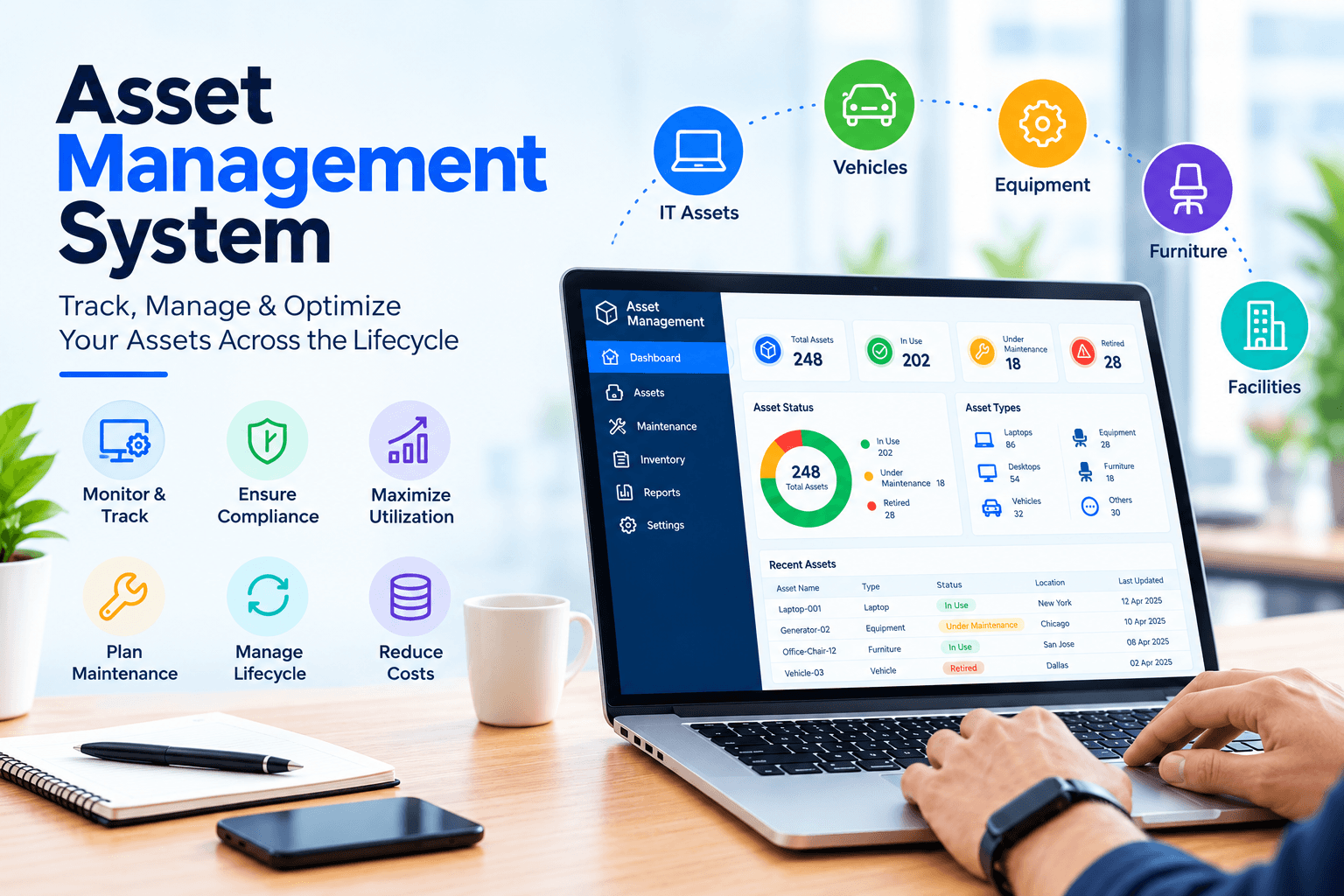
Asset management software allows organizations to track, manage, and optimize their assets. It also consists of vehicles, equipment, licenses, machinery, devices, and digital resources. The software follows each asset from purchase to retirement.
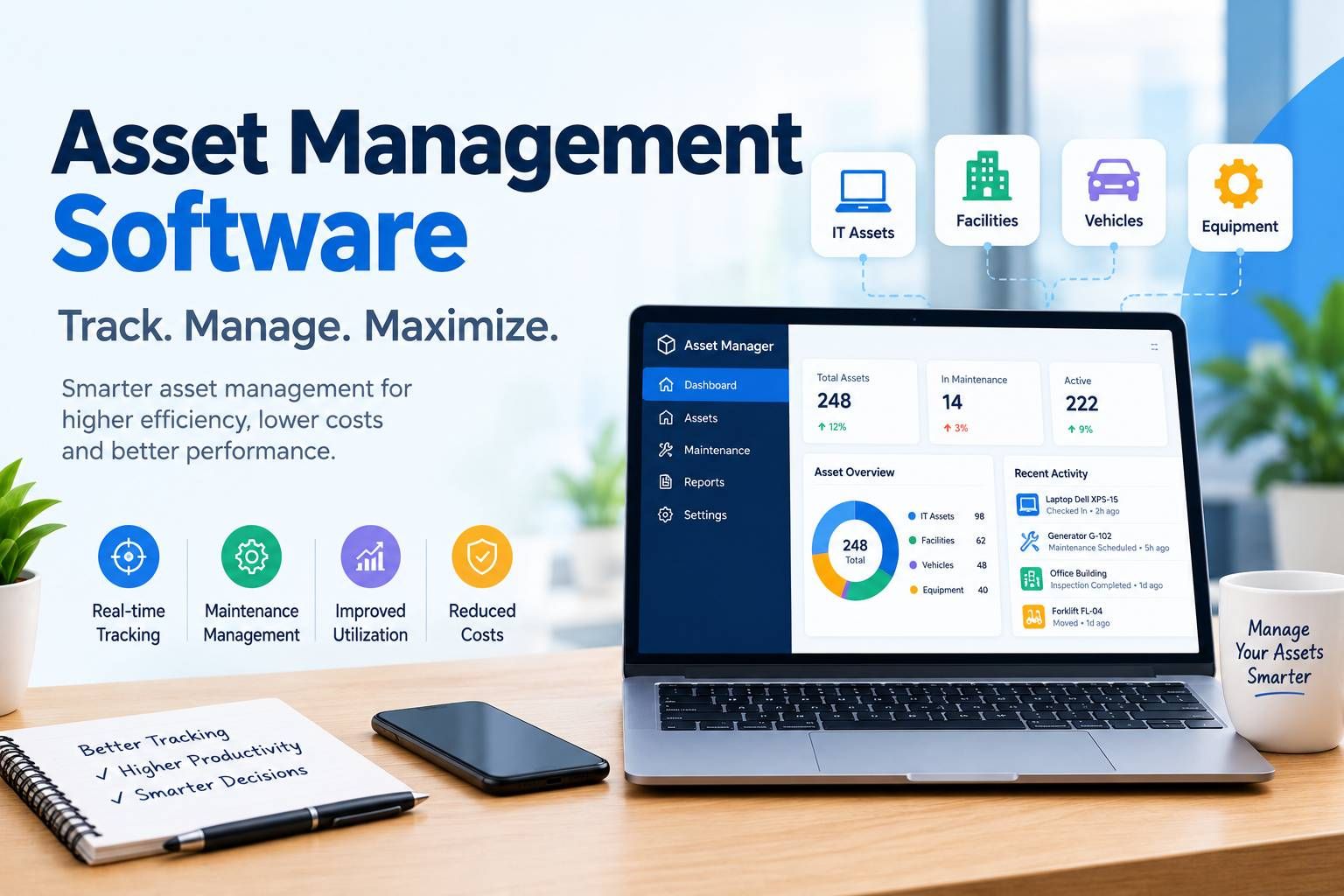
The build decision matters because asset management touches almost every department. Finance needs it for depreciation and audits. Operations needs it for uptime. IT needs it for security and compliance. A standard system creates problems across the whole organization. As a result, it leads to slow decisions and minimizes risk.
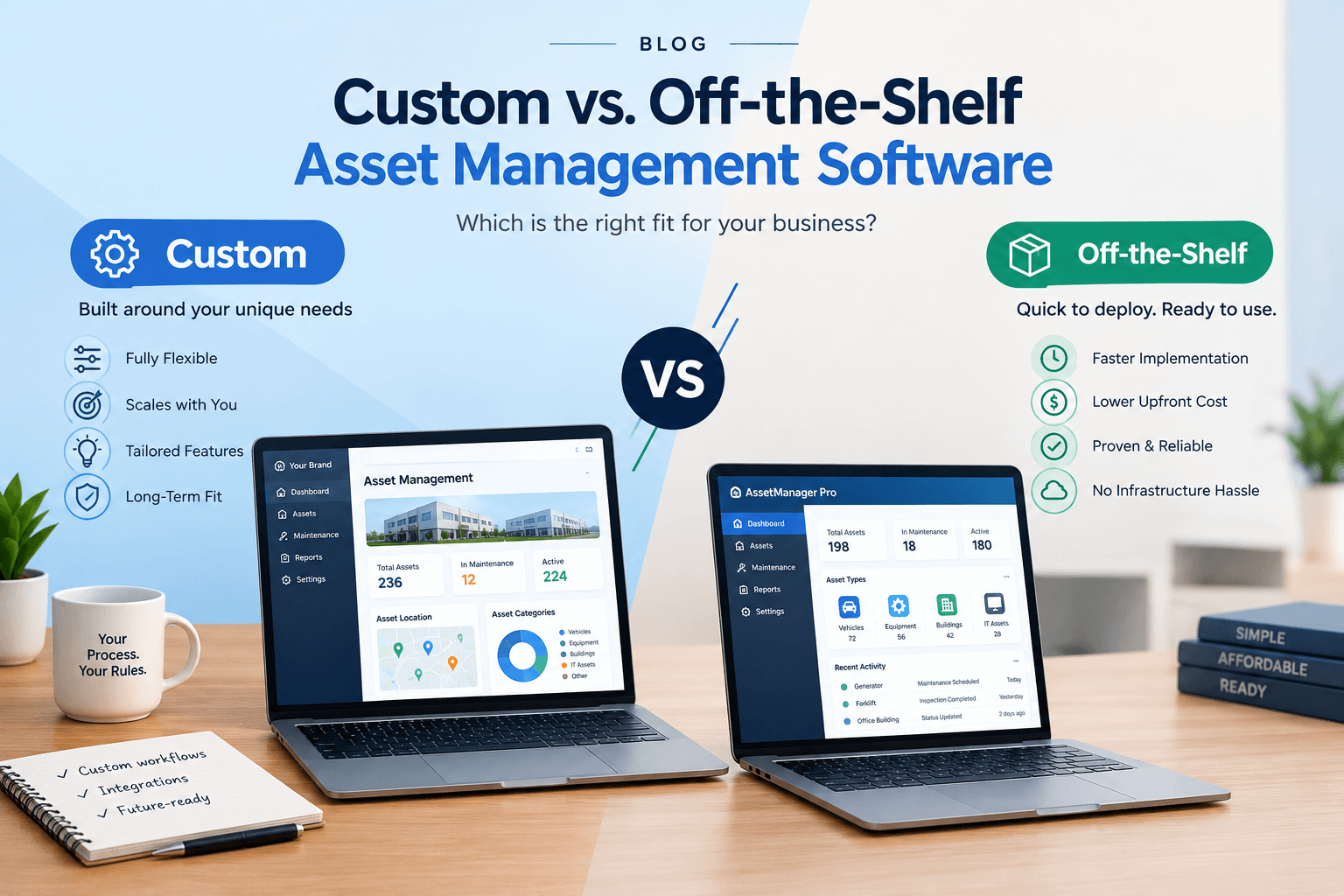
Off-the-shelf asset management software offers speed. Custom asset management software offers fit. The right choice depends on how complex your asset environment is. It depends on how fast you scale and how much advantage you want from operations.
3.Overview of Off-the-Shelf Asset Management Software
Off-the-shelf platforms are already ready-made products. Vendors develop them for a diverse range of customers. In addition to that, they include a standard interface, fixed features, and pricing on the basis of users or asset volume.
3.1.Real Advantages
These are the real advantages:
- Faster deployment: Most tools can go live in weeks. This helps businesses that need a solution right away.
- Lower upfront cost: Subscription pricing spreads the expense over time.
- Established support and updates: Vendors handle security patches, bug fixes, and new features.
- Predictable functionality: Buyers can test the product through demos and trials first.
3.2.Where It Falls Short for Growing Enterprises
- Feature duplication and gaps at the same time: You pay for modules you never use. Moreover, you still miss the one workflow your business needs.
- Limited customization: Some settings are still available. True changes are often unavailable or costly.
- Integration friction: Linking the platform to your ERP, CRM, or IoT sensors often needs extra tools or manual work.
- Scaling penalties: As assets or users grow, license costs rise fast. The extra cost does not always match the value.
- Vendor dependency: Your roadmap follows the vendor’s roadmap. If a needed feature is not on their list, you wait or leave.
Off-the-shelf software works for businesses with simple, standard asset workflows and limited budgets. It becomes a problem the moment your operations move away from the vendor’s default setup.
4.Custom Asset Management Software: Built Around the Business, Not the Other Way Around
Custom asset management system is built for one organization. It matches your workflows, data structures, compliance needs, and existing systems. The tool fits your processes. You do not change your processes to fit the tool.
4.1.Why Enterprises Choose Custom Builds
These are the listed reasons why companies are choosing personalized creation.
1. Precision fit for complex or unique workflows
No two enterprises track assets the same way. A logistics company with owned and leased vehicles has different needs from a hospital tracking medical equipment under strict rules. Custom software follows the exact way your teams work.
2. Seamless integration with current systems
A custom-built system can easily connect directly to your finance software, ERP, IoT sensors, and internal databases. In addition, this removes manual fixes and duplicate data entry. Leadership gets one reliable source of truth.
3. Scalability without punitive costs
Custom systems grow with your plans. Adding a new asset type, business unit, or region does not force a new license deal. You scale the software the same way you scale the business.
4. Full data ownership and stronger security
Your asset data stays in systems you control. Security rules match your industry needs, such as HIPAA, SOC 2, ISO 27001, or other rules. You do not depend on a vendor’s shared setup or their view of compliance.
5. Competitive differentiation
When every competitor uses the same off-the-shelf platform, no one gains an edge. Custom software becomes part of your advantage. Faster maintenance, better usage rates, and cleaner reports create cost savings and service quality that others cannot easily match.
6. Long-term cost efficiency
Custom development costs more at the start. It removes ongoing per-user and per-module fees that grow over years. For enterprises with large or fast-growing asset bases, total cost often favors custom software within three to five years.
5.Difference Between Custom and Off-the-Shelf Asset Management Software
An advanced off-the-shelf asset management platform uses APIs and low-code setups to serve as custom software. Read on to learn the answer.
Business Factor | Off-the-Shelf Software | Custom Asset Management Software |
Initial cost | Lower upfront and subscription-based model. | Higher upfront and project-based model. |
Time to deploy | A few weeks | Several months, and it totally depends on the scope. |
Customization | Limited to vendor configuration | Built entirely around your workflows |
Integration | Often requires middleware or manual work | Native integration with existing systems |
Scalability | Cost increases with usage and users. | Built to scale with the business |
Data ownership | Shared vendor infrastructure | Full organizational control |
Long-term cost | Recurring fees compound over time. | Lower marginal cost per additional asset or user |
Competitive advantage | Minimal, since competitors use similar tools | High, since the system is unique to your operations |
This table does not declare one option always better. It also enables companies to determine which investment is worth it based on the complexity and business goals.
6.When Is Off-the-Shelf Beneficial?
Custom software development service is not right for every business. A good partner will say so clearly.
- A company has a small, simple asset base with standard workflows.
- You need a solution live in a few weeks and cannot wait longer.
- An enterprise’s budget cannot cover upfront development costs, even if long-term costs look better.
- Your asset management needs will stay mostly the same for several years.
If these points describe your business, a solid off-the-shelf asset tracking system can deliver enough value without the work of a custom build.
7.When Custom Asset Management Software Becomes the Smarter Investment
Custom Software development pays for itself when the business shows one or more of these signs.
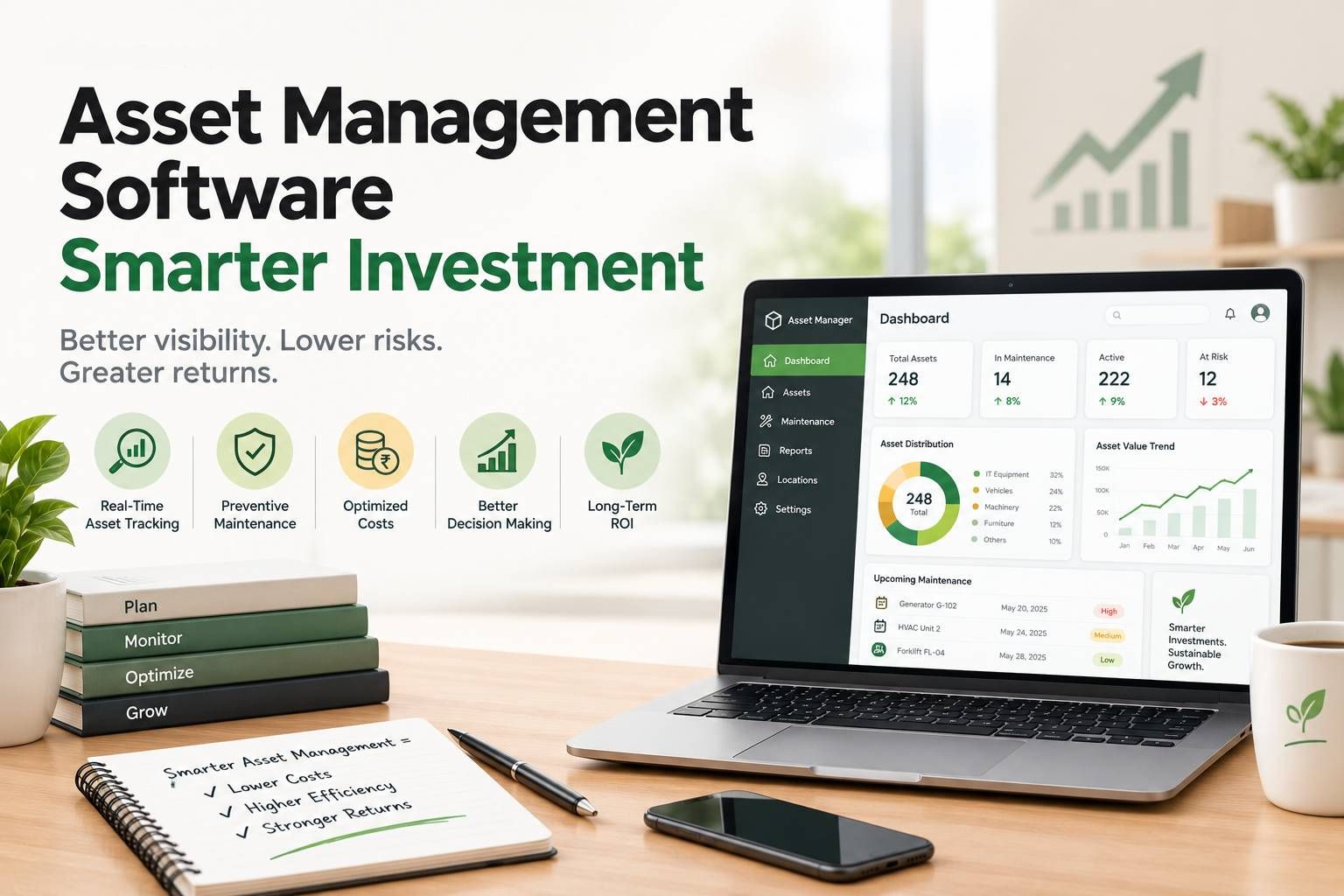
7.1.Your Asset Environment Is Getting More Complex
You track a growing mix of IT hardware, physical equipment, digital licenses, and field assets across many locations. Generic tools start to fail. Complexity is where custom software earns its value.
7.2.You Are Scaling Fast
Security is one element a fragmented analysis solution cannot deliver for businesses that move in and out of new markets, product line offerings, or acquisitions. They do not want to renew contracts with every increase in the number of people and assets.
7.3.Compliance and Security Requirements Are Non-Negotiable
Even non-health care, financial, or manufacturing industries now face increased scrutiny, especially government-related entities. Generally speaking, off-the-shelf tools provide some basic compliance functionalities.
7.4.You Have Outperformed Your Current System’s Reporting
Leadership makes decisions from manually built spreadsheets instead of real-time dashboards. This shows the current system cannot give the visibility the business now needs.
7.5.Integration Has Become a Full-Time Job
Your IT team spends more time fixing connections than improving operations. The software has turned into a burden instead of a help.
8.How to Choose Between Custom and Off-the-Shelf Asset Management Software
A clear process works better than a quick guess. Enterprise buyers should follow these steps.
- Map your current asset workflows from start to finish. Create a comprehensive inventory of manual processes, workarounds, and systems your team is using today.
- Calculate the financial cost of inefficiency on a hidden level. Force-multiply for hours lost to manual fixes, downtime due to poor visibility, and risk of compliance exposure from siloed data.
- List integration needs. Note every system that asset data must connect to, including ERP, finance, HR, and IoT platforms.
- Compare total cost of ownership over five years for both options. Look beyond the first-year price.
- Review your growth plans. If asset volume, users, or complexity will double soon, include that in the scale comparison.
- Bring stakeholders in early. Finance, operations, IT, and compliance teams should all share input. Each group will use the system differently.
This process often makes the answer clear. Businesses with simple, stable needs usually choose off-the-shelf. Businesses with complexity, scale, or compliance pressure usually choose custom.
9.The Business Impact of Getting This Decision Right
Choosing the right asset management approach is a business strategy choice, not just a technology choice. Enterprises that use effective asset tracking often cut unnecessary spending. Better usage, fewer extra purchases, and less downtime drive those savings. About 40 percent of IT departments name integration complexity as a major barrier to value from a new system. Custom software is built to remove that barrier.
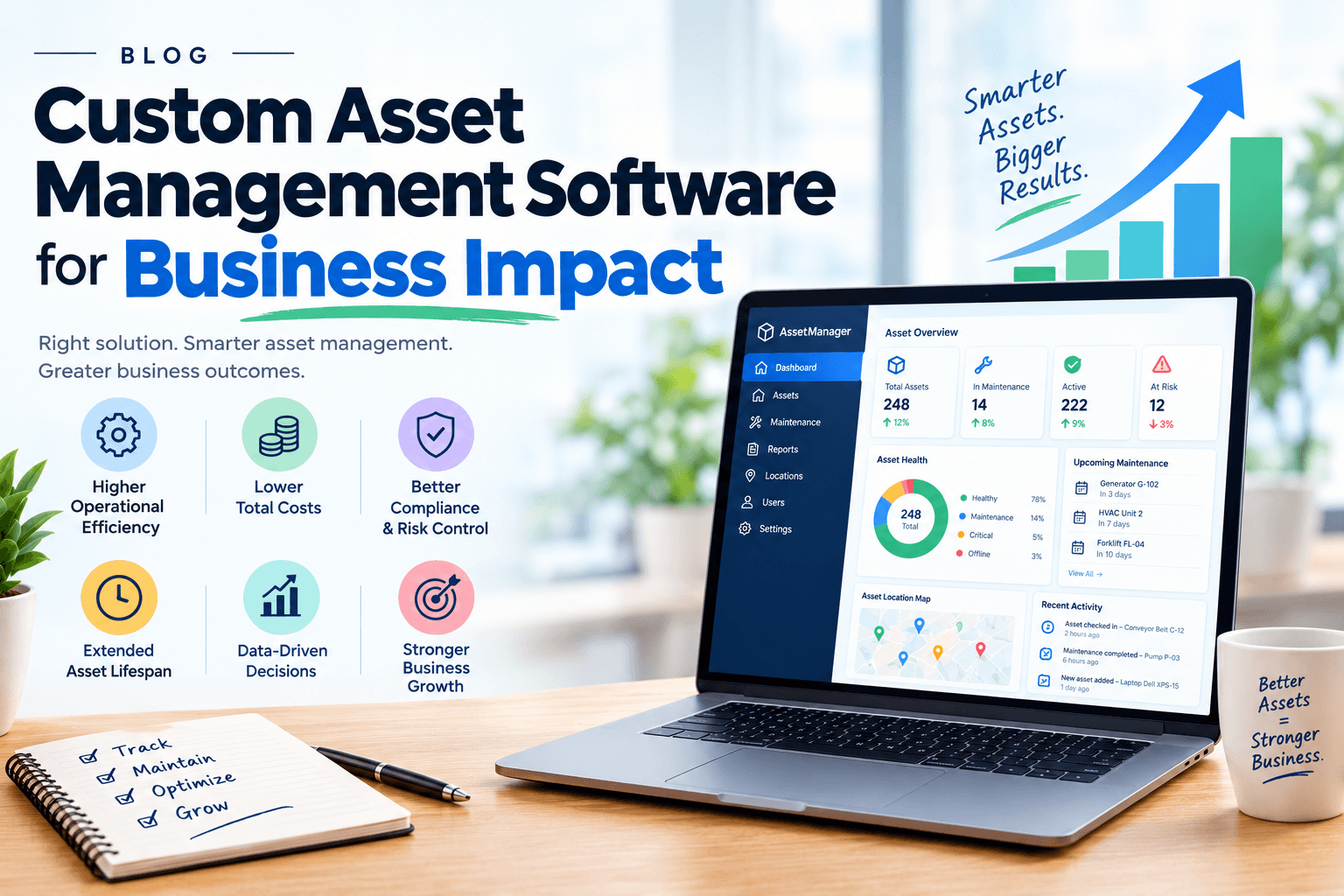
Businesses that treat asset management as a strategic function gain real operational strength. Some adopt a proven off-the-shelf platform for a simple asset base. Others invest in a custom asset management system built around unique workflows. The core idea stays the same. The software should support the strategy. It should not limit it.
Enterprises that choose well free up capital. They reduce operational risk. They give leadership real-time visibility for faster, better decisions. That is the true return. Cleaner asset records matter. A business that runs with fewer blind spots and more control over its growth matters more.
10.Most Commonly Asked Questions Along With Their Answers
These are all the answers that most businesses are looking for. By reading all these questions, all your doubts will be cleared.
Q1. Why is custom asset management software often recommended for enterprises with complex operations?
Ans. Custom software matches the specific workflows, compliance needs, and integration requirements of the business. Enterprises with complex or changing asset environments avoid the workarounds and license limits that often come with generic platforms.
Q2. What is the main difference between custom software and off-the-shelf software in asset management?
Ans. Off-the-shelf software offers a fixed set of features for a wide customer base. On the other hand, custom asset management software is built specifically for one organization’s processes, data structure, and systems.
Q3. How does custom asset management software improve long-term ROI?
Ans. The upfront cost is higher. Custom software removes ongoing per-user and per-module fees. It lowers integration and workaround costs. It scales without new contract talks. Total cost of ownership often becomes lower over three to five years.
Q4. What types of businesses benefit most from custom asset tracking software?
Ans. Businesses with complex, multi-location, or fast-growing asset environments gain the most. So do those with strict regulatory rules or heavy integration needs with existing systems.
Q5. How long does it take to develop a custom asset management system compared to deploying an off-the-shelf tool?
Ans. Off-the-shelf tools can usually go live in weeks. Custom asset management software development usually takes several months. The time depends on the complexity of workflows, integrations, and compliance needs.
Q6. Can a business start with off-the-shelf software and move to a custom system later?
Ans. Yes! Typically, most enterprises will begin with a production-grade platform in order to validate their processes. They switch to the custom asset management software once the asset base, integration needs, or even regulatory requirements grow out of that general-purpose tool.