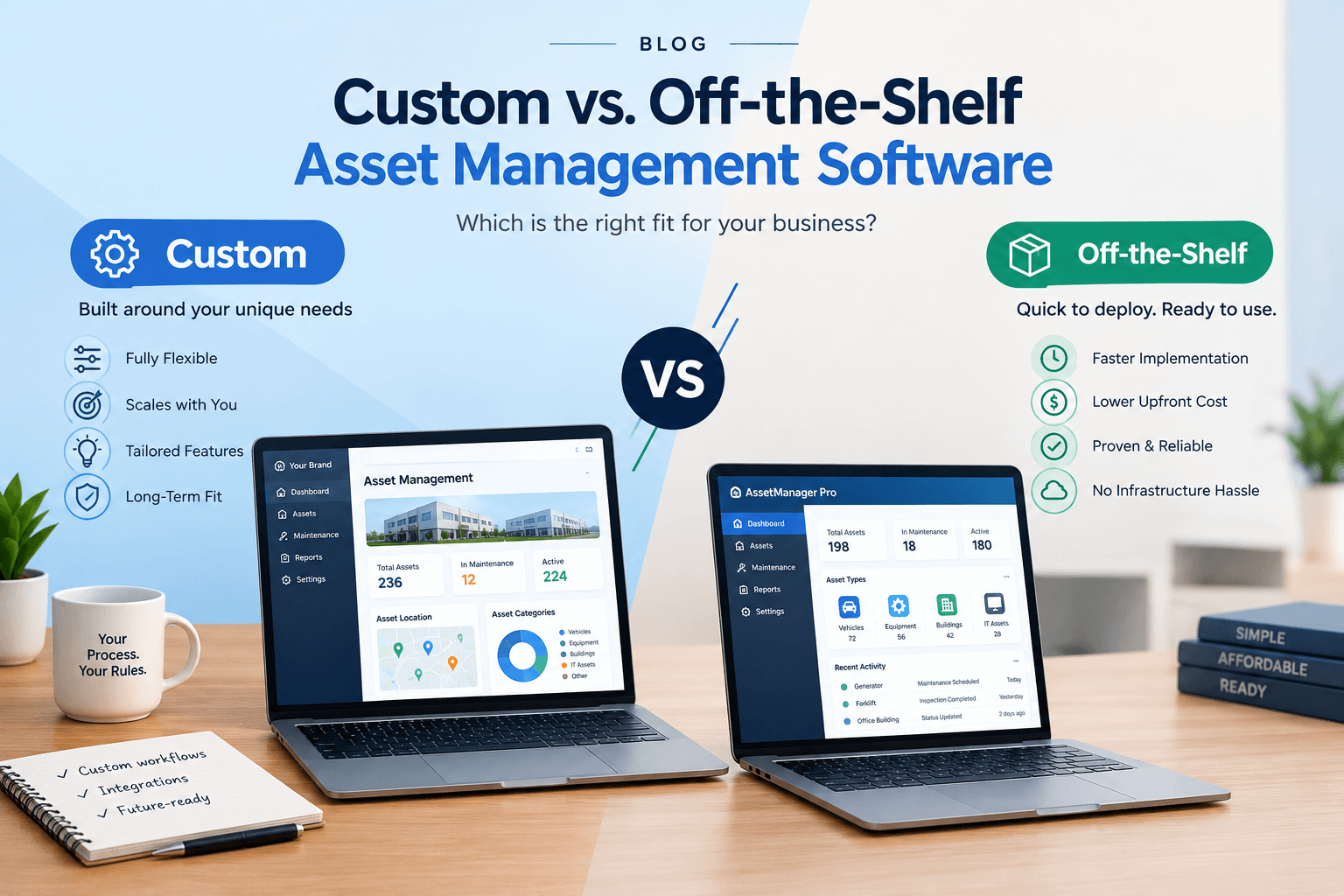
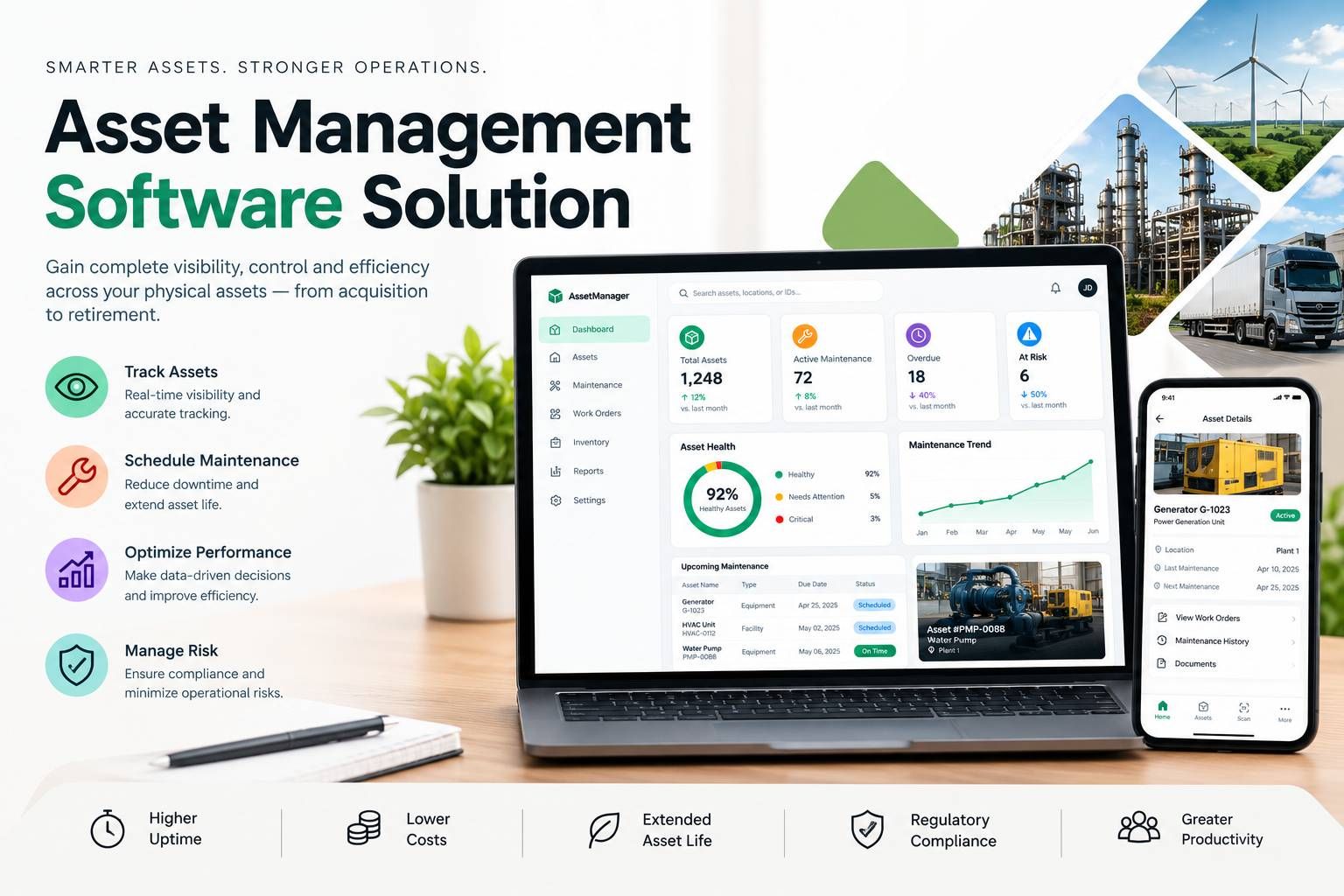
1.Introduction
Just suppose that your operations lead needs a clear count of laptops, servers, and equipment. The team works across three offices and many remote workers. Finance asks for depreciation numbers and total costs for the next board meeting. In addition, compliance is seeking proof that every asset is safe and adequately compensated for.
The team opens several spreadsheets. They check previous emails and still cannot give a solid answer on time. The company buys extra devices by mistake. Unused software licenses keep renewing and equipment remains unused in a storage space while new orders are placed.
Growth should create strength. Instead, it creates friction, wasted money, and risk. This happens to many scaling companies.
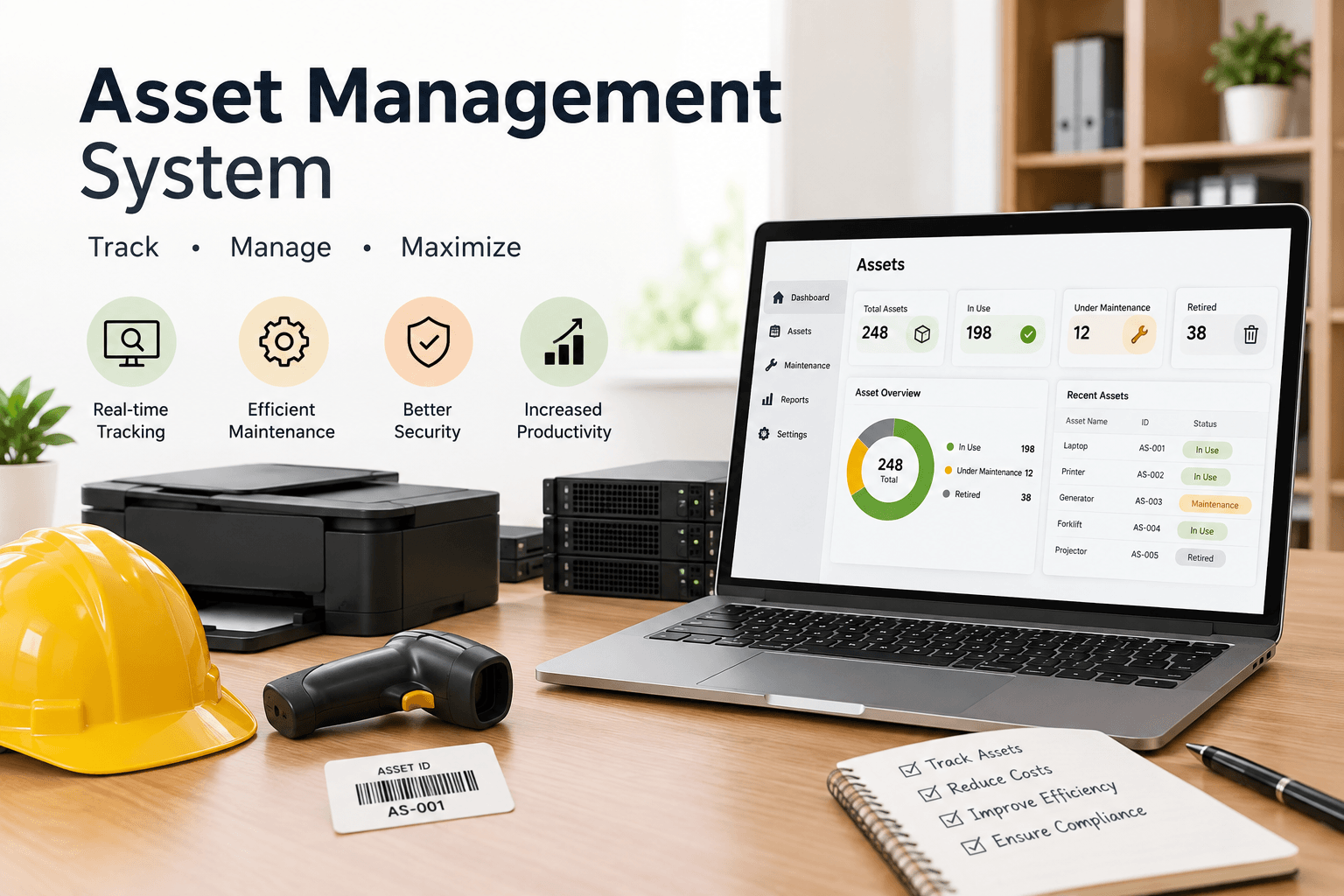
An asset management system fixes the problem. It lets leaders have what the business possesses, where it is, how it is used, and what it costs. So, this comprehensive guide will discuss what this software is better for efficiency, cost control, and competitive edge.
2.What Is an Asset Management System, and Why Does It Matter Now?
An asset management system is software that tracks physical, IT, and fixed assets from start to finish. It includes purchasing, using, maintaining, and getting rid of them.
Modern systems are leveraging barcode or RFID scanning. They auto-discover IT assets, show real-time location when needed, track depreciation, and create reports for finance, operations, as well as security teams.
Business asset management is more than a simple list. IT asset management covers hardware, software licenses, cloud resources, and endpoints. Fixed asset management handles machines, vehicles, furniture, and facility equipment. Asset tracking software and enterprise asset management software bring these together. Leaders can see usage rates, find unused resources, control spending, and lower risk.
Market demand shows the need is real. The global asset tracking software market grows fast. According to experts, growth will remain double-digit strong through the end of the 2010s. Spreadsheets or separate tools still lead to high costs, compliance issues, and slow decisions for businesses. They need speed and control most at this stage.
3.Why Are Growing Businesses Struggling Without Structured Asset Management?
Growth adds complexity fast. Tracking 50 devices with one spreadsheet is fine, but they are quickly in trouble at 500 or 5,000 assets. Such assets span across branches, warehouses, remote employees and hybrid deployments.
Common problems include:
- Incomplete or old inventories teams do not know what they own or what is in use.
- Ghost assets and lost equipment raise insurance costs, create security gaps, and mess up financial reports.
- Software license waste and compliance risk from unused or extra licenses.
- Manual data errors and slow updates lead to reports for audits or boards become unreliable.
- Hard links between asset data and maintenance. This leads to sudden repairs and downtime.
- Information scattered across teams, which slows buying, onboarding, and offboarding.
These problems grow. Many organizations still have weak data accuracy. A large share of IT budgets goes to unused or untracked resources. Growing businesses lose money. They also lose time and face a higher risk of compliance failures or security issues that hurt trust.
4.How Asset Management Software Delivers Measurable Business Value
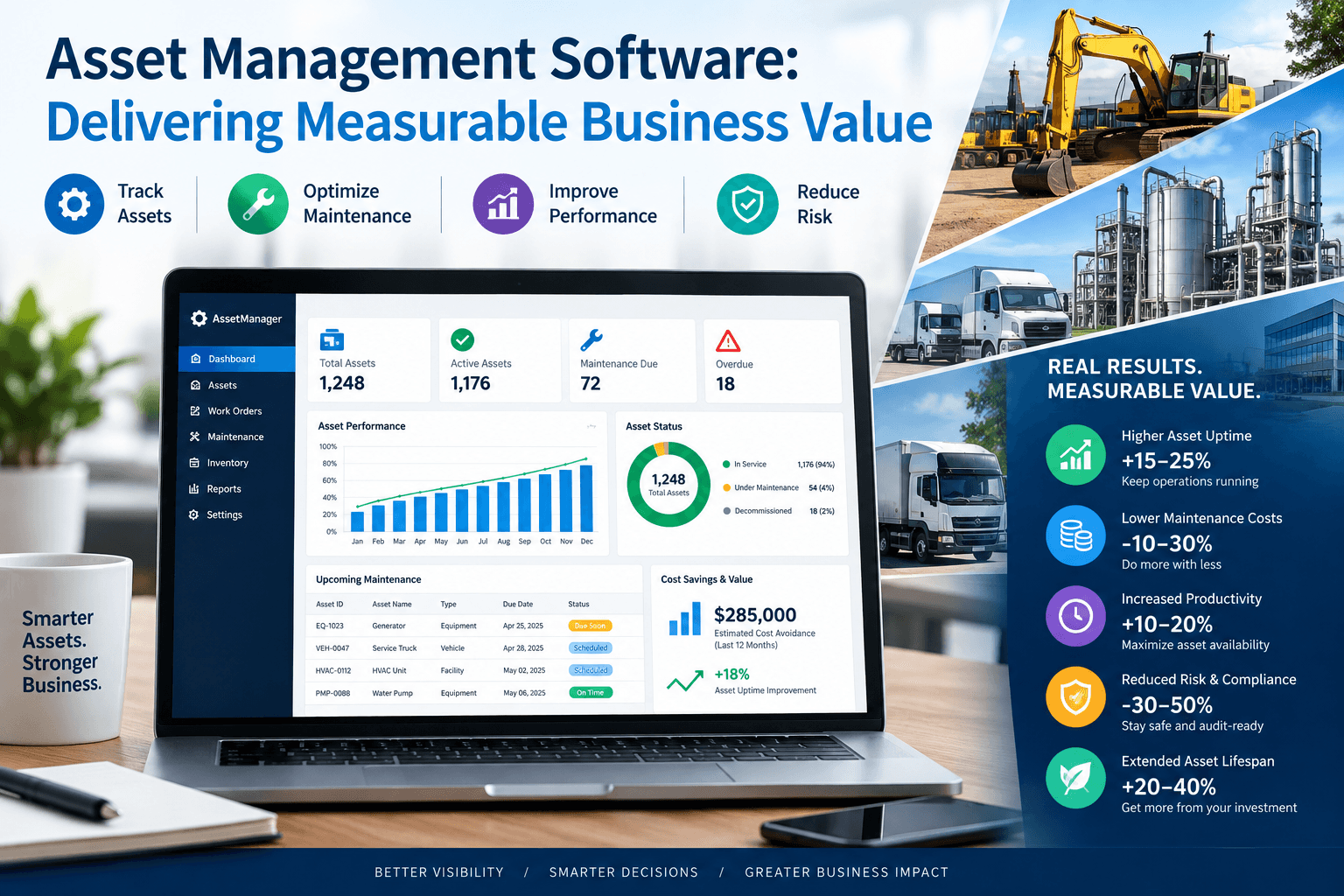
The best reason to use an asset management system is clear results. Leaders want lower total costs, higher usage, faster decisions, less risk, and the power to grow without adding equal admin work.
4.1.Cost control and spending optimization
Clear visibility stops extra purchases. It finds unused licenses or idle hardware that teams can reuse. Strong IT asset management practices often cut software licensing costs by a large share. They also save money on hardware refresh cycles. Cloud spending drops when teams see what is actually needed. Finance gets solid data for depreciation, tax planning, and budgets instead of guesses.
4.2.Operational efficiency and productivity
Teams stop spending hours searching for information or fixing conflicting spreadsheets. They focus on better work. Automated discovery, check-in and check-out tools, and real-time status updates cut admin time, and maintenance becomes proactive. Companies that use better assets data often cut unplanned downtime and lower maintenance costs. Operations run smoother as well as capacity grows with the business.
4.3.Risk reduction and compliance strength
Untracked assets create security and regulatory gaps. An asset management system keeps clear records of ownership, location history, and full lifecycle events. This makes audits easier. It supports data protection rules and lowers the chance that retired devices leave data behind or that unauthorized software opens holes. For regulated industries or companies facing big audits, fast, accurate records become a real advantage.
4.4.Scalability and strategic decision-making
As the business adds locations, people, or product lines, the system handles more volume without needing many more people for tracking. Leaders get usage numbers, total cost insights, and lifecycle forecasts. These guide better spending choices. Asset data supports digital transformation instead of blocking it. Growing companies that treat asset management as basic infrastructure free leaders to focus on market growth.
4.5.Competitive advantages through better resource use
In markets where speed and cost matter, the company that knows exactly what it owns and how well it is used moves faster. It avoids extra capital spending and keeps higher service levels. Marketplace operators and multi-location businesses benefit from consistent processes and visibility across sites.
5.Examples of Practical Scenarios that Explain the Difference
Let us take an example of a mid-sized tech company going from one office to multiple cities + remote workers. Without central tracking, laptop setup becomes messy. Software licenses Services drift out of compliance. Finance cannot forecast refresh needs well. With an asset management system, new hires get ready devices with clear records. Unused licenses get reclaimed before renewal. Leaders see usage trends that guide the next hardware buy.
A manufacturing or logistics company managing special equipment faces similar pressure. Lost or poorly maintained assets cause production delays. Real-time tracking and maintenance schedules reduce those delays. They also extend equipment life and protect both output and capital.
In both cases the change is the same. Teams move from chasing information to managing value.
6.What Growing Businesses Should Prioritize When Evaluating Solutions
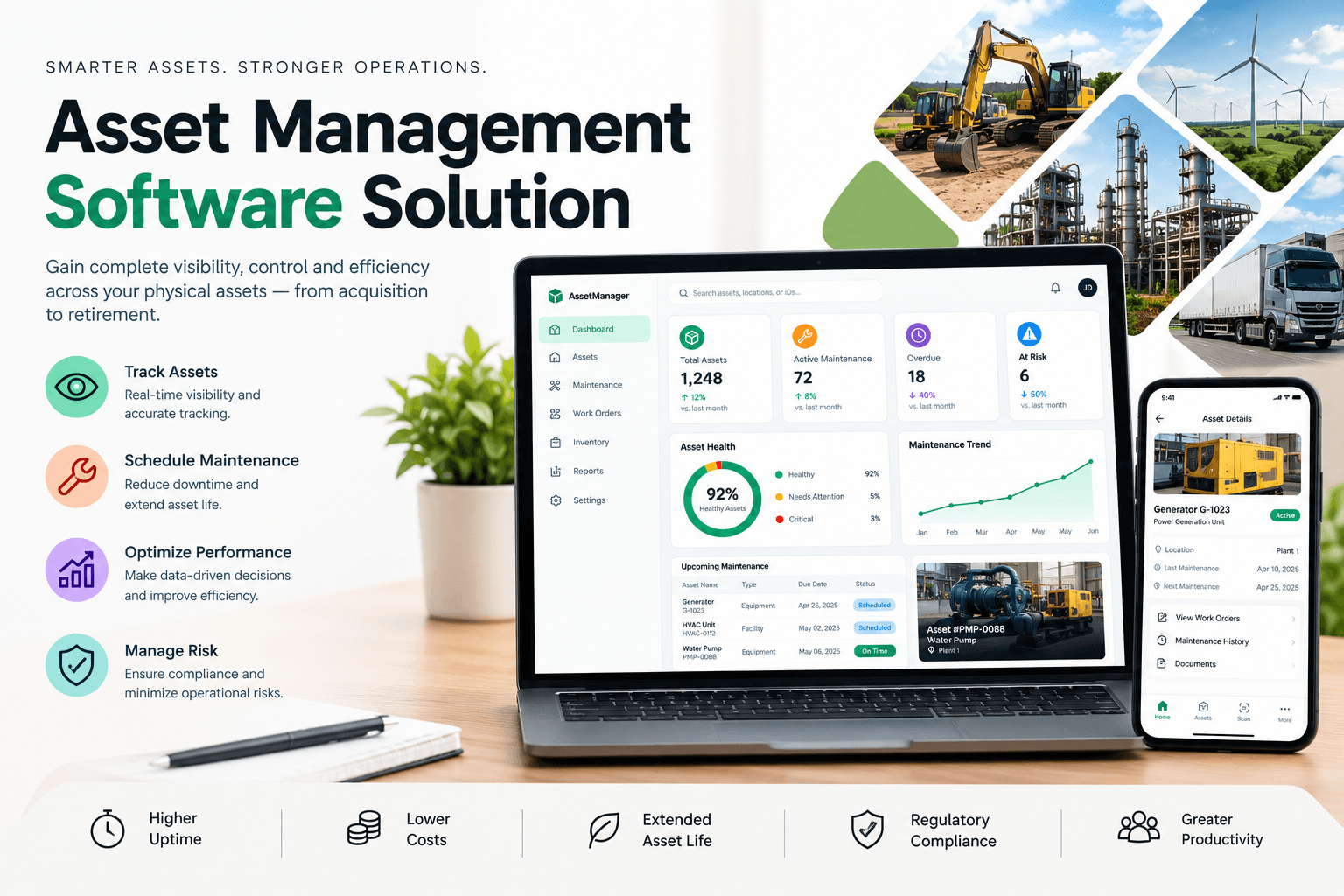
These are the following key factors that every company must prioritize while focusing on asset management system solutions.
- Focus on results that match the company’s stage and needs.
Choose platforms that handle both IT and fixed assets if the business manages mixed items. - Pick tools that are easy to adopt so teams actually use them.
- Look for links to existing finance and IT tools.
- Choose automated discovery when possible. Demand strong reports that work for executives and daily teams.
- Cloud-based options often lower infrastructure load for growing companies and work well for distributed teams.
Success comes when leaders treat the system as the single source of truth.
- Clean the starting data.
- Set clear process owners.
- Align IT, finance, and operations.
Many organizations see clear returns in the first 12 to 18 months through less waste, lower admin effort, and fewer compliance costs.
7.Time to Sum Up
Growth without control creates hidden drag. Every untracked device, unused license, or delayed maintenance quietly cuts margin and slows the company. An asset management system removes that drag. It turns scattered information into reliable insight leaders can act on.
The Business Impact of Getting This Decision Right shows up in tighter cost control, higher asset use, stronger compliance, and the ability to scale without matching admin growth. Leaders who act while the company still grows turn expansion into lasting efficiency instead of growing complexity.
The question is no longer whether the organization needs better asset visibility. The question is how fast leadership can build the foundation that protects capital, cuts risk, and frees teams to focus on customers and growth.
8.People May Also Ask
Q1. Why do growing businesses need asset management software more than stable ones?
Ans. Rapid growth multiplies assets, locations, and users. It also raises the cost of mistakes. Manual methods that work at small scale break under volume. This creates waste and risk when the business needs speed most.
Q2. What is the difference between IT asset management and fixed asset management?
Ans. IT asset management tracks technology resources such as hardware, software licenses, and cloud services. Fixed asset management covers longer-lived physical items such as equipment, vehicles, and facilities. Many modern systems handle both for one clear view.
Q3. How does asset tracking software improve ROI for mid-sized companies?
Ans. It cuts duplicate spending, recovers unused licenses and idle hardware, lowers admin work, shortens audit preparation, and supports better maintenance planning. Companies with strong practices often see double-digit savings in key cost areas and returns that beat the investment in the first one to two years.
Q4. How can leaders measure the success of an asset management system?
Ans. These are the common approaches through which leaders measure the success rate of asset management software.
- Track usage rates.
- Measure drops in extra purchases or license waste.
- Count time spent on inventory and audit tasks.
- Check accuracy of financial records.
- Watch incidents from lost or non-compliant assets.
- Compare these numbers before and after against the full cost of the system.
Q5. What risks does a company face by delaying adoption of business asset management tools?
Ans. Cost leaks from unused resources continue. Compliance findings or security gaps from untracked assets rise. Decisions are slow because data is unreliable. Cleanup gets harder as the asset base grows larger and more spread out.
Q6. How should a growing business begin implementing asset management solutions?
Ans. Start with clear pain points and priority asset types. Choose a platform that fits the scale and links to current systems. Set ownership between IT, finance, and operations. Clean and move core data. Train teams on consistent processes. Measure early wins in visibility and cost control to build momentum.